Those who are fundamentally optimistic and hopefully see the positive have a greater chance of benefiting from the placebo effect.
January 1, 2023
Philip Reichardt
Health
Placebos: When and how do they help?
Faith supposedly not only moves mountains but actually heals illnesses. The power of positive expectation is so strong that placebo research is trying to uncover why, with fascinating insights.
Share article:
Magazine
Find a Doctor
How can that be? What secret forces are at work? A patient with arthritis in the knee lies on the operating table, firmly believing that the surgeon will relieve him of his pain with scalpel and a few targeted maneuvers. In fact, he is not operated on at all. Instead, he only receives a few cuts in the skin. Later he will report that he no longer feels any discomfort in his knee. Does wishing really help?
What is a placebo?
180 patients participated in the University of Houston experiment, 120 were operated on, 60 only received a few cuts on the skin. 90 percent of the non-operated had hardly any pain two years after the operation and could climb stairs again.
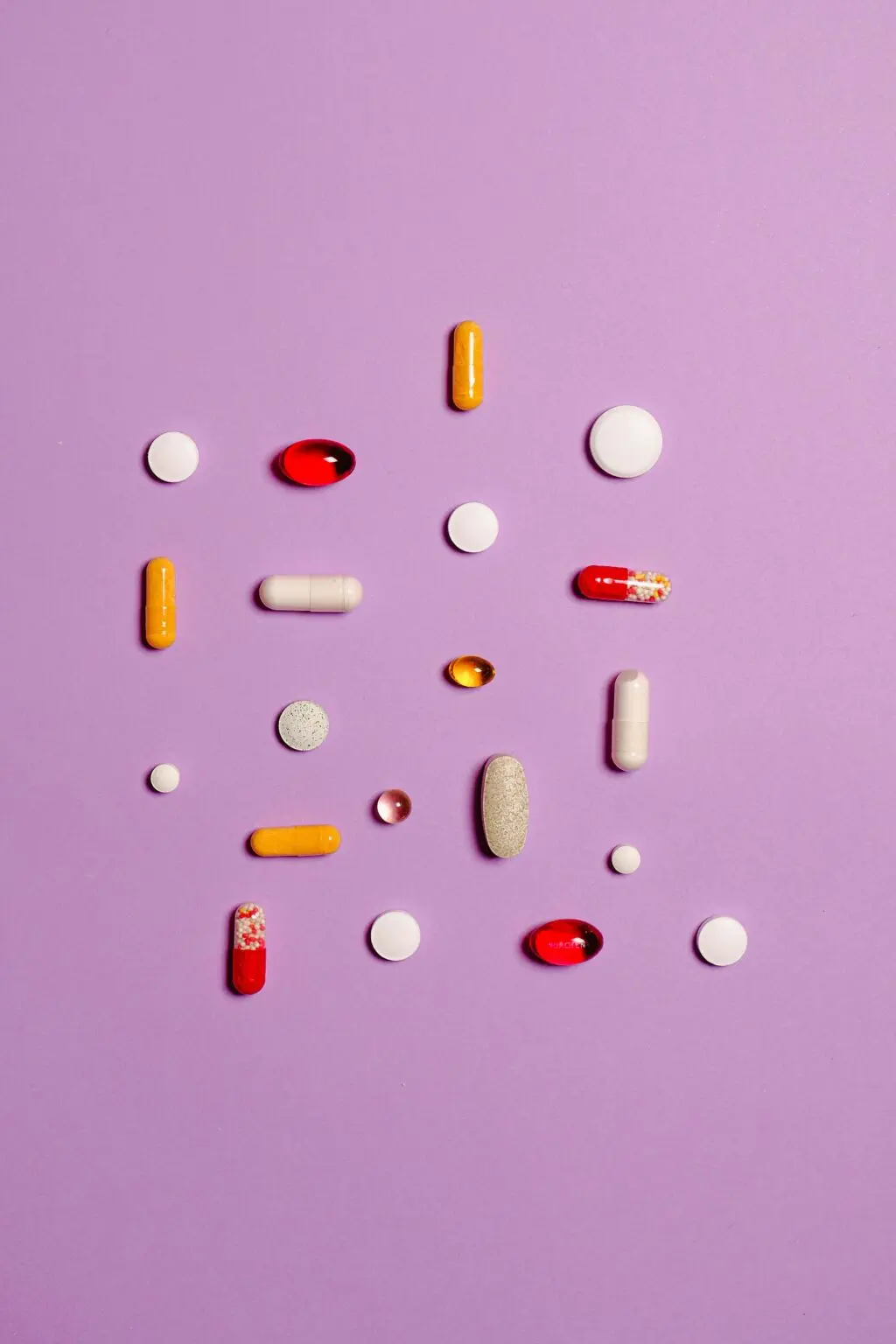
A series of studies tell similar stories. Asthma patients receive a drug laced with vanilla essence. After two weeks, the subjects only inhale the aroma, yet their lung function improves. Depressed individuals feel better after taking a drug for eight weeks, which they believe to be a psychotropic medication. In reality, it only contained sugar and starch: a placebo.
It was only in the 1970s that scientists discovered a measurable physiological mechanism underlying the placebo effect.
One aspect of the placebo's mode of action was already known to Plato. The Greek philosopher wrote that an herb only works if it is administered with a phrase that suggests relief. Even the tinctures of shamans and the medicines of witch doctors activate their self-healing powers only in conjunction with appropriate formulas and rituals. The healing powers attributed to homeopathy are also based on this.
How is a placebo used?
The fact that the placebo effect is based on a measurable physiological mechanism was discovered by science only in the 1970s. Since then, pharmaceutical research has used placebos to test the effectiveness of new drugs. It must prove that they work better than a placebo.
One half of the test subjects is given a medication, the other half is given the so-called placebo, a pill without an active ingredient. The crucial point: Neither doctors nor subjects are allowed to know which participant belongs to which group. Only if the drug being tested is significantly superior to the placebo is it considered effective and receives approval.
Something being a placebo means: It pretends to be something that it actually is not. An empty shell.
This way, a series of studies emerged that provide valuable data to science. Incidentally, this application leads to the term placebo being negatively connoted in everyday language. Saying something is a placebo means: It pretends to be something it is not. An empty shell.
Quite the opposite of the placebo effect, which regularly causes astonishment, but above all has sparked the interest of research, as it promises unexpected possibilities to make a number of therapies more effective.
An interdisciplinary research project around the neurology professor Ulrike Bingel and the professor of psychoneuroimmunology Manfred Schedlowski has been dealing for three years under the title “Treatment Expectation” (treatment-expectation.de) with the question of what effects positive and negative patient expectations have on the success of treatments.
Placebo effect: This is how it works
It is certain that the placebo effect is based solely on the patient's positive expectation. That is, on the assumption that doctor, medication or therapy it helps him. This also explains the effect that often occurs as soon as you see a doctor. Just talking to someone you trust and give authority to can lead you to leave a practice healthier than you entered it. This technique used to be called discussing.
It is certain that the placebo effect is based solely on the patient's positive expectation.
In times when there wasn’t a suitable medication for every ailment, it was one of the primary tasks of doctors; to explain connections, to convey confidence that pain and symptoms would subside and healing would occur.
A mechanism that is more or less consciously used in playgrounds and children's rooms. A child cries, it is not clear whether from shock or pain.
Father or mother rushes over, looks at the wound, says a few comforting words, and blows where it hurts. And lo and behold: The pain subsides, often forgotten after a few moments. What exactly happens in the body at that moment.
Manfred Schedlowski, director of the Institute for Medical Psychology at the University of Essen, describes it like this: "A strong expectation changes the brain chemistry, messengers are released, and these changes are conveyed to the body via the nervous system, where they often set exactly the desired effects in motion."
What happens in the body when you take a placebo?
The placebo acts like a neural self-fulfilling prophecy, putting the body in a state that ensures the expected result actually occurs. Placebos can, as has been proven, unfold up to fifty percent of the healing effects of a drug, but: there's no guarantee. Whether and to what extent the effect occurs depends on a number of factors.
The placebo acts like a neural self-fulfilling prophecy.
"Who benefits the most, we do not know. So far, there is no personality criterion or genetic trait that consistently indicates a special readiness for placebo effects. What we do know: The most significant factor in whether someone develops a positive expectation and physically benefits from it is prior experience. If someone has responded positively to a medication or therapy three times, their expectation is higher the fourth time," says Ulrike Bingel.
In addition, there is evidence suggesting: Those who are generally optimistic and see the positive with hope have a greater chance of benefiting from the placebo effect. Placebos are particularly effective in conditions where the psyche is involved, such as depression, sleep disorders, Parkinson's, and various types of pain.
The placebo effect can be enhanced by a principle psychologists call conditioning. If a patient successfully takes a painkiller, they associate specific stimuli with taking it, such as the color of the medication or its taste. As a result, this stimulus alone can already suffice to provide relief because the brain is conditioned to it.
Manfred Schedlowski administered a drink tasting of strawberry milk and lavender to 30 house dust allergy sufferers for five days. It was mixed with an antihistamine that reduced allergic reactions. After a break, some of the subjects only received the strawberry milk to drink. It continued to work just as well as the medication. The immune system had apparently learned that strawberry flavor with a hint of lavender helps against the allergy.
Those who are generally optimistic and see the positive hopefully have a greater chance of benefiting from the placebo effect.
However, the mechanism underlying the effect also works the other way around. That is the nocebo effect. Yvonne Nestoriuc, professor of clinical psychology at the Helmut Schmidt University in Hamburg, calls it the "evil twin" of the placebo effect. It can be observed when discontinuing medication: A patient who expects negative consequences from a lower dosage increases the likelihood that the feared consequences will occur.
Are placebos also used in mental illnesses?
In depression, this mechanism makes it difficult to end treatment, "because people might then be convinced: As soon as I stop taking my antidepressant, the depression will return," says Nestoriuc. In short: Negative expectation amplifies negative effect. How can this be avoided? There is still much work to do for researchers.
Since 2020, neurologist Professor Ulrike Bingel has been leading the "Treatment Expectation" research project at the University of Essen, a consortium of 19 teams of neurologists, psychologists, psychiatrists, physicists, and biologists.
What are positive expectations and how do they influence healing?
Professor Bingel, the central concept of placebo research is "positive expectation." What exactly does it mean – a person's nature or the expectation in a specific situation?
It's about the expectation that is directed at a therapy, a physical or mental condition. If I take a certain medication, it will have certain consequences. Expectation is not a character trait but a dynamic construct. It can change over the course of life, depending on what experiences you have and what information you receive – and how you then evaluate them for yourself.
How positive must the expectation be for the body to trigger processes that contribute to healing?
How much expectation is right is very different and cannot be generally answered. Positive expectation is better than having no expectation. And much better than negative expectation. However, the expectation must not be exaggerated. If it is so high that the body cannot fulfill it, the expectation breaks and the trust relationship between doctor and patient is damaged.
When I advise colleagues on how to best communicate with patients, I recommend always setting realistic goals. Often, a treatment can already be improved by helping patients with negative experiences to regain an open expectation and freeing them from fears.
What factors influence the expectation?
For some patients, it is helpful to understand how medications work. For some, having observed the success of therapy in other people is also helpful. Others are positively inclined by reading an informative article. And for some, the sentence "If you were my mother, I would do it the same way" triggers a positive expectation. There are different ways to steer the expectation in the right direction.
Placebo effect despite knowledge: How open-label placebos work
How can it be explained that the placebo effect can occur even when the patient knows they are receiving a placebo, i.e., a medication without active ingredients?
This is an exciting phenomenon. We only know that it works. But we don't know exactly why, for whom, and how long these effects last. I don't have an answer to that, because it doesn't really have anything to do with expectation.
I suspect that an open-label placebo – a medication that the patient knows contains no active ingredient – can help me especially if I am open to the idea that it can help me.
If I feel better one morning, which can also happen in the natural course of illnesses, I attribute this improvement to the open-label placebo. Over time, an expectation builds up through experiences that I might have had anyway. I can't prove this, but studies support this notion, as these effects usually only appear after seven to ten days.
This means that an open-label placebo does not work like a light switch that is turned on, but rather the placebo is like a Trojan horse that opens one up for this process and makes self-healing powers usable. Time and future research will show what value OLPs will have in clinical practice. Perhaps they will become a piece of the mosaic in our therapeutic arsenal.
For me, the best way is not necessarily to use the placebos, but the expectation to make existing and developing therapies more effective and tolerable.
For which diseases are placebo effects strongest?
One goal of your research project is to increasingly use the effect of positive expectations in therapies. For which conditions is this possible or sensible?
In our research project, we are investigating the effect of expectations on chronic pain and depression. There are countless studies in which new medications are tested against placebos.
And from this we know that up to two-thirds of the total success in treating pain and depression is due to placebo effects. Therefore, these are promising areas of research. They are extremely relevant because depression and pain are always at the top of the list of the most common diseases.
This means there is a great need to optimize existing therapies. However, this does not mean that it is not also sensible to use these effects for other diseases.
How can the effects of positive expectations be used for this?
The aim of our research is to make existing medications more tolerable, to increase their effectiveness, and to reduce their side effects by using the effects of positive expectations. The new antibody therapies, for example against migraines, are a blessing, very effective, but also very expensive.
If less active ingredient is needed, the effectiveness increases, and the drugs could be offered to more people. Tolerability is also a major issue. Every year, thousands of tons of medication end up in the trash because people are afraid of therapy, have had bad experiences, or are concerned about tolerability. In clinical reality, unfortunately, nocebo effects dominate.
Nocebo effect: When negative expectations harm healing
So the reversal of the placebo effect, when negative expectations slow down the effectiveness of a drug or therapy. It has been reported that social media can amplify nocebo effects.
We know that media, not just social media, have a great influence on patients' expectations. There are actually studies on this, for example on the side effects of COVID-19 vaccinations. The result: The more often someone read posts and media reports about undesirable side effects, the more often side effects such as arm pain, fever, or chills also occurred. This is a problem that will occupy us for a long time.
How doctors can avoid nocebo effects through better communication
How can nocebo effects be avoided?
The best thing you can do to keep the nocebo effect as small as possible is communication and good education. Most patients are handed a prescription with the sentence: please take twice a day! But the individual benefit of the treatment, and how a drug works in the body, is often not communicated at all.
Package inserts as nocebo drivers: Why education must be rethought
Or think of package inserts, they are nocebo drivers par excellence! There are three pages talking only about death and doom, but less about what the medication is good for. This comes from the old thinking that a drug docks onto a receptor, and then there is a reaction. This is true, but only in part. Because in addition to this specific effect on molecules and receptors, expectation effects play a role and influence whether something develops better or worse.
There is little time for detailed conversations in everyday practice. This is a huge problem. The knowledge that communication is an essential part of treatment that leads to medications working better or being taken at all has been lost in the enthusiasm for the biomedical understanding that developed around 150 years ago.
Does this mean that the study of placebo effects can also be understood as a revival of ancient medical knowledge?
I see it as a renaissance of the art of healing, which is now empirically founded. Phenomenologically, the great thinkers of antiquity have already described all of this. Our goal is to integrate the scientifically founded knowledge that context and communication play an important role into orthodox medicine.
Homeopathy and Placebo: What Really Lies Behind the Effect
Does this also mean that the effect attributed to homeopathy primarily relies on the effect of positive expectation?
Exactly. What works in homeopathic treatments, we know: communication, personalized strategies, trust, rituals – all this is empirically proven. This means what works in homeopathy is not the globules, but the trust I place in the method and the initial medical history.
Everything else lacks logic and any scientific knowledge. Homeopathy combines a number of things that we know maximize positive expectations and placebo effects. Only the globules are not needed.