© Bitcom
Federal Health Minister Carsten Linnemann at Bitkom's Digital Health Conference in Berlin
November 26, 2026
Moira Hammes
The technology for a digital healthcare system already exists, yet implementation remains slow. Bitkom’s Digital Health Conference in Berlin highlighted the barriers to progress and how mounting financial pressures threaten to delay the transformation even further.
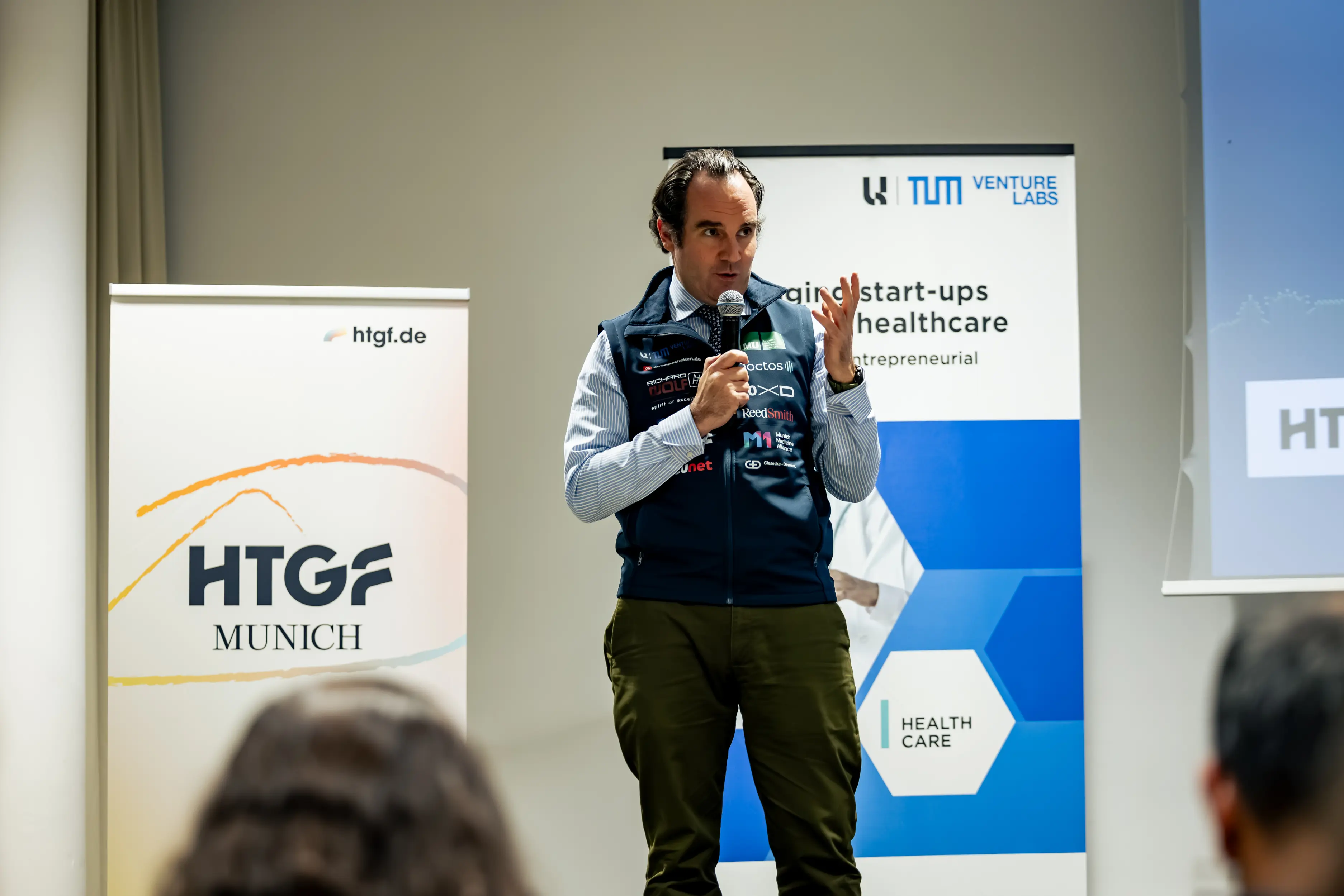
For me, this year began with DMEA, continued through numerous digital health events, and has now wrapped up with the Digital Health Conference 2026, hosted by the digital association Bitkom at Kosmos Berlin. Many familiar faces, many familiar companies. Bitkom Director General Dr. Bernhard Rohleder had good reason to describe the opening as a kind of industry "class reunion." The conference's tenth edition drew more than 1,000 attendees, around 100 speakers, and over 30 sessions.
The motto "From Strategy to Implementation" struck a nerve. Even the first show of hands in the room revealed just how divided experiences over the past months have been. Many attendees felt that digitalization — through faster appointments, the e-prescription, and access to their own health data — had genuinely improved their care.
Yet almost as many were equally familiar with the opposite: applications that didn't work, a patchy ePA, and ultimately picking up the phone anyway. As Rohleder noted, of ten digitalization projects launched by the Federal Ministry of Health, nine had been started but not one had been completed.
Anyone moving from panel to panel throughout the day quickly noticed how much there is still to discuss — particularly at the political level.
What this looks like in practice was brought to life by a panel using the fictional case of Ms. K., a 58-year-old who develops severe abdominal pain on a Tuesday evening. Does she call 116117 or 112? Go to the emergency department? Her GP's practice has long since closed — maybe ask ChatGPT first? Jana Hassel from BAG Selbsthilfe described what this kind of uncertainty does to people.
Because anyone who repeatedly finds themselves unable to get an appointment learns to adapt. "People train themselves and know: okay, I need to make my symptoms sound a little worse than they actually are. That way I'll at least get into hospital."
What this pathway should look like in future remains politically unresolved. The emergency care reform, a triage feature in the health insurers' ePA app, and the primary care act all promise better coordination — but none has yet proven sustainable. Dr. Sibylle Steiner, a board member of the National Association of Statutory Health Insurance Physicians, warned against funneling access solely through insurer apps, arguing this would create discrimination and new barriers.
The conversation turned to how rarely patients themselves are involved in shaping these pathways. Jana Hassel criticized the fact that patient representation is not even included in the development of triage tools. Bringing users in early is essential to ensuring they understand new systems and technologies.

Heike Nowotnik from the AOK Federal Association stressed the importance of health literacy — a topic that had already emerged as a weak point in the system at DMEA. Marcel Weigand flipped the perspective: "Can't the system itself become more competent?" The discussion moved on to the accessibility of digital applications, the need for multiple equivalent access channels from app to telephone, and the importance of clear, comprehensible information that actually helps people understand the value of these offerings in the first place.
Only in this way can patients be empowered to become active users of these systems — something that could also pay dividends for those systems' overall success.
Many panels arrived at the same conclusion: what is needed is a sovereign, interoperable infrastructure through which information reaches wherever it is needed. The ePA exists, but so far it is only sporadically filled and used. When PD Dr. Sara Sheikhzadeh asked the audience who already uses the ePA and who does not, the room was split — and this in a crowd of people with a keen interest in digital health.
Forpatients, everyday life therefore often remains frustrating. Anyone who, despite existing infrastructure, has to repeat the same information over and over again loses not only patience but also time that was meant to be spent on diagnosis and treatment.
Placing this responsibility solely on practices and clinics falls short, however — they simply lack the resources. According to Sheikhzadeh, doctors, therapists, and nursing staff spend at least three hours a day on documentation. Dr. Carol Wildhagen from Tandem Health put it plainly from a physician's perspective: "That's [not] what we studied for [...]."
Compounding this is a fragmented system landscape in which hospitals operate with different platforms that barely talk to one another. Anyone who needs an interface often has to purchase it at great expense.
The European Health Data Space (EHDS) offers hope here. Going forward, it will require manufacturers to provide interfaces as standard. From 2029, e-prescriptions and patient summaries are set to work seamlessly across borders. Lukas Wrosch from gematik described the goal this way: people traveling in Europe should not only enjoy free roaming, but should also be able to access their health data wherever it is needed.
Just how far ahead of regulation reality already is was illustrated by a figure from the opening. According to a recent Bitkom study, 70 percent of people in Germany who search online for symptoms or health questions use AI. Twenty percent of them say that at some point they have not followed medical advice after consulting an AI.
On the physicians' side, the picture looks similar. "Shadow AI already exists today," said Prof. Dr. Alexander Meyer, Professor of Artificial Intelligence in Medicine at the Charité. Many doctors and healthcare professionals have long been using ChatGPT and similar tools — largely unchecked at an institutional level.
Technical progress is outpacing the legal framework. Prof. Dr. Ariel Dora Stern from the Hasso Plattner Institute pointed out that our definition of a medical device is rooted in legislation dating back to 1976 — legislation written for static products, not for algorithms that continuously evolve.
At the same time, several voices emphasized that regulation is necessary, provided it remains practical and does not stifle progress. It was equally clear that AI systems can only deliver their full benefits if people know how to work with them. Without targeted training in digital and health literacy, neither trust nor meaningful use will follow.
Nina Warken, the then Health Minister, said at this year's DMEA that she wanted to achieve savings not at the expense of digitalization, but through it. Just over half a year later, that ambition stands in stark contrast to the GKV Contribution Stabilization Act, which was referred to in one panel as "the healthcare cuts act." The criticism was that instead of structural reform, it offers only "short-term sticking plasters."
At the same time, bureaucracy is growing — for example through a significant expansion of audits by the Medical Review Board on behalf of health and long-term care insurers. Budget pressures are also colliding with what was described as a "double tsunami": ever more elderly and chronically ill patients entering the system, while the baby boomer generation is retiring from the workforce.
Health Minister Dr. Carsten Linnemann struck a different note in his keynote, stating his intention to keep the healthcare system affordable through AI, personalizedprevention and the use of health data. The ambition is considerable, but the panels made clear how far it is from the reality facing hospitals and practices, which are primarily dealing with short-term cuts.
My personal takeaway from the Digital Health Conference: the technologies are already there, and with the EHDS there is a binding European framework in place. "The building blocks are there. It's about actually putting them together," said Dr. Irina Tihaa in one panel. The challenge now is to connect those building blocks in a future-proof and, above all, interoperable way.
The message running through many panels was unambiguous: be bolder, start rather than wait for the last implementing regulation, and then stay the course.
But one question remains open for me: who pays for the transformation in an era of austerity? The answer will determine whether "From Strategy to Implementation" becomes reality in 2027 or remains just a motto once again. That will also be the year the Digital Health Conference takes place for the first time in October, as part of Smart Health Europe at the Berlin exhibition grounds.

"Feel good, live better" – in this episode, Dr. Caroline Werkmeister talks about her favorite topic: feet. And what they reveal about your lifestyle.
Christine Bürg

An interview with
Dr. Caroline Werkmeister

Blood pressure, cholesterol, blood sugar – routine check-ups help assess many health risks. But what can our genes reveal about diseases that may not develop until years later? In her column, human geneticist Dr. Laura von der Heyden explains the potential and limitations of genetic testing in preventive medicine.
Dr. Laura von der Heyden

By
Dr. med. Laura von der Heyden

Losing your sense of smell can be dangerous: more than one in three people affected has failed to notice smoke or similar warning signs. ENT specialist Prof. Dr. Frank Haubner explains when to see a doctor, what causes distorted smells, and why recovery is possible even years later.
Christine Bürg & Marianne Waldenfels
An interview with
Prof. Dr. med. Frank Haubner