© Valeriya Kobzar
November 26, 2026
Nils Behrens
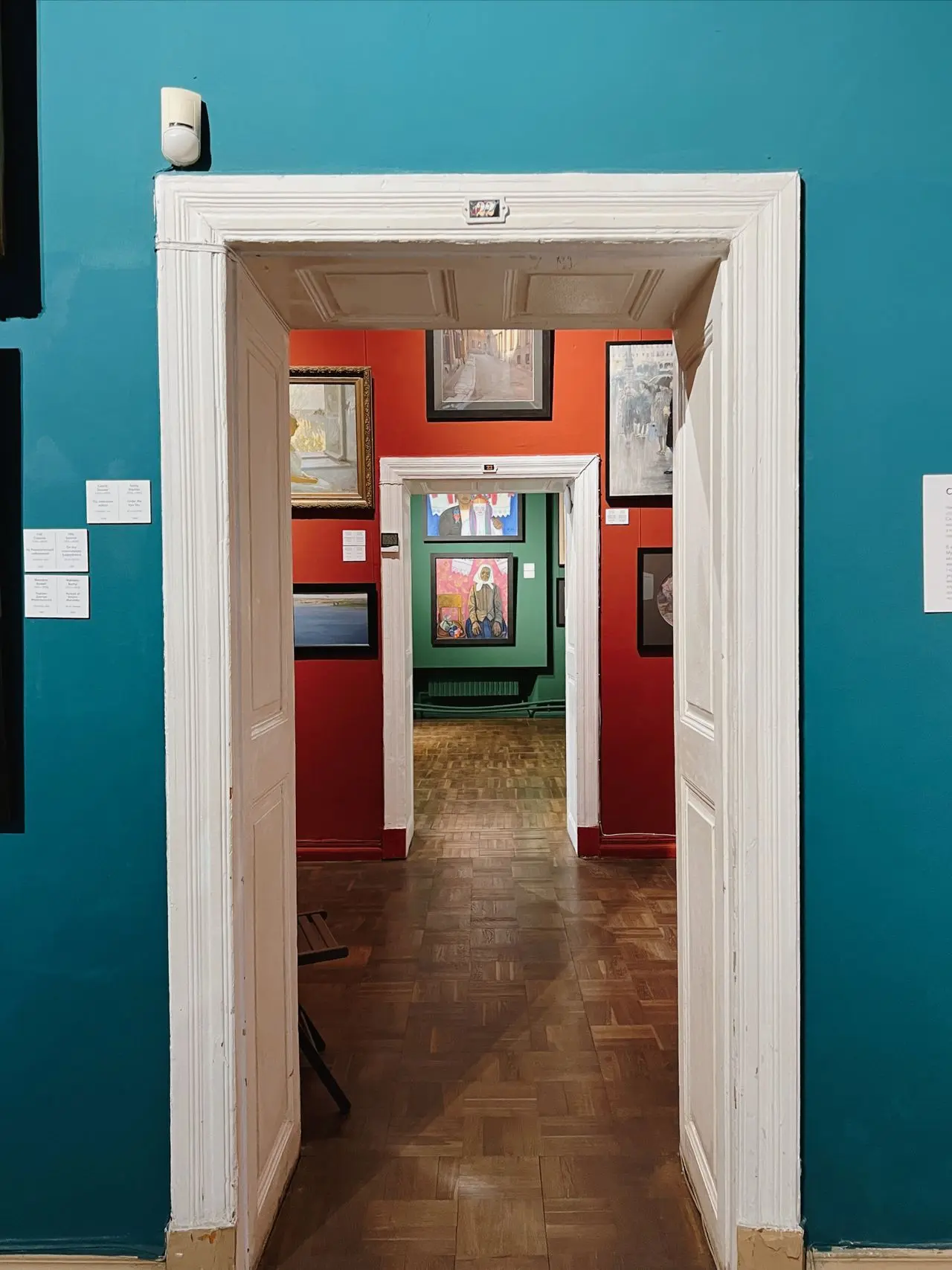
An evening at the opera or a visit to an art exhibition may contribute more to healthy aging than previously thought. In his column, Nils Behrens draws on a 15-year study to explore how cultural activities might benefit our mental health.
People who visited the theater, a museum, or the cinema every few months were hospitalized for mental illness less frequently over the following roughly 15 years — by nearly a third. The intriguing question is: is this due to culture itself, or to the kind of people who attend?
In the conversations for my podcast HEALTHWISE, the focus is often on exercise, sleep, and nutrition. We talk far less often about how we spend our evenings. Yet we experience culture almost always in the company of others — surrounded by strangers in the same hall, or alongside people who matter to us.
A simple image comes to mind: think of your mind as a house you live in every day. Over time, routines settle in like stale air in rooms that never get opened. A concert or an exhibition works like flinging the windows wide. Fresh impressions rush in, emotions stir, and afterward there is something worth talking about.
Pei Qin, Andrew Steptoe, and Daisy Fancourt from University College London analyzed data from the English Longitudinal Study of Ageing, a representative longitudinal study of people aged 50 and over. Their study was published in October 2026 in the journal JAMA Network Open.
More than 8,000 participants reported in 2008/2009 how often they went to the cinema, museums and exhibitions, the theater, concerts, or the opera. The researchers then linked these responses to hospital records through March 2024, tracking who received a diagnosis such as dementia, depression, or a substance use disorder.
One important caveat: this is an observational study. It identifies associations, not causation. I cannot claim that visiting a museum prevents dementia.
Compared with people who never attended cultural events, those who went every few months or more frequently had a 29 percent lower risk of being hospitalized for a mental illness.
The risk was also 29 percent lower for dementia, 27 percent lower for mood disorders such as depression, and 25 percent lower for substance use disorders. The analysis accounted for factors including education, wealth, occupation, smoking, , physical inactivity, and social isolation.

Nils Behrens is the host of the health podcast HEALTHWISE and Strategic Brand Partner of Sunday Natural. Previously, he served for over 12 years as Chief Marketing Officer and was the face of the Lanserhof Group, as well as host of the successful Forever Young podcast. In more than 350 expert interviews, he explored paths to a longer and healthier life.
Another noteworthy point: regular culture-goers tend to be better educated and more affluent. So is the study simply measuring the effects of wealth? To test this, the researchers ran a counter-check. Eye conditions, ear disorders, and head injuries affect similar population groups as mental illnesses.
If cultural attendance were merely a marker of a privileged life, frequent culture-goers would also have needed hospital treatment for these conditions less often. That was not the case. To return to the house metaphor: opening the windows improves the air inside, but does nothing to fix the roof. This is precisely the pattern the data revealed.
One particularly striking finding: for anxiety and stress-related disorders — ranging from phobias to post-traumatic stress disorder — no clear association remained after all adjustments. The authors suggest that culture may matter more for conditions that develop gradually, and less for those that are often triggered by a single event.
The dementia finding also warrants caution. When the researchers accounted for the fact that culture-goers live longer on average — and therefore have a longer window of opportunity to develop the condition — the association was no longer statistically significant. It is also worth noting that only cases resulting in hospitalization were captured, and cultural behavior was recorded just once.
Whether culture is genuinely protective still needs to be demonstrated by randomized studies. In the meantime, there is little reason not to open the windows more often — especially during the darker months. That said, a well-ventilated house still needs solid foundations: exercise, sleep, nutrition, stress management, and people with whom you can share your experiences.
All columns by Nils Behrens on premiummedicalcircle.com can be found here!

"Feel good, live better" – in this episode, Dr. Caroline Werkmeister talks about her favorite topic: feet. And what they reveal about your lifestyle.
Christine Bürg

An interview with
Dr. Caroline Werkmeister

Blood pressure, cholesterol, blood sugar – routine check-ups help assess many health risks. But what can our genes reveal about diseases that may not develop until years later? In her column, human geneticist Dr. Laura von der Heyden explains the potential and limitations of genetic testing in preventive medicine.
Dr. Laura von der Heyden

By
Dr. med. Laura von der Heyden

Losing your sense of smell can be dangerous: more than one in three people affected has failed to notice smoke or similar warning signs. ENT specialist Prof. Dr. Frank Haubner explains when to see a doctor, what causes distorted smells, and why recovery is possible even years later.
Christine Bürg & Marianne Waldenfels
An interview with
Prof. Dr. med. Frank Haubner