© Magnific
September 14, 2026
Christine Bürg & Marianne Waldenfels
Collagen is frequently recommended for joint pain – often with the promise that it can strengthen or even rebuild cartilage. A large scientific review now paints a more nuanced picture. Orthopedic surgeon PD Dr. Daniel Berthold explains who may benefit from collagen – and what these supplements cannot do.

With
PD Dr. med. Daniel P. Berthold
Collagen is said to strengthen joints, relieve pain, and at best even rebuild damaged cartilage – or so the marketing behind powders, capsules, and drinks would have you believe. The scientific evidence has long been a matter of debate. But a more nuanced picture is beginning to emerge: of all conditions, osteoarthritis may be one where collagen can actually make a real difference.
A large scientific review now provides evidence of a benefit in osteoarthritis. However, that effect has little to do with the oft-cited idea of rebuilding cartilage.
"Collagen is neither a miracle cure nor a myth," says PD Dr. med. Daniel P. Berthold, specialist in orthopedics and trauma surgery and medical director of OrthoCenter Munich.
The basis of the current discussion is ascientific paper published in January 2026, which drew on data from a total of 113 randomized studies involving nearly 8,000 participants.
"This work is not a single study but a so-called umbrella review that brings together previously published meta-analyses. It gives us a solid overview of the existing evidence," explains Berthold.
The results are quite encouraging. "The data suggest that collagen can moderately reduce pain and joint stiffness in people with mild to moderate osteoarthritis, particularly of the knee. That said, it cannot be called a miracle cure."
The quality of the underlying studies is also not consistently convincing. Many had methodological weaknesses and ran for only a relatively short period of time.
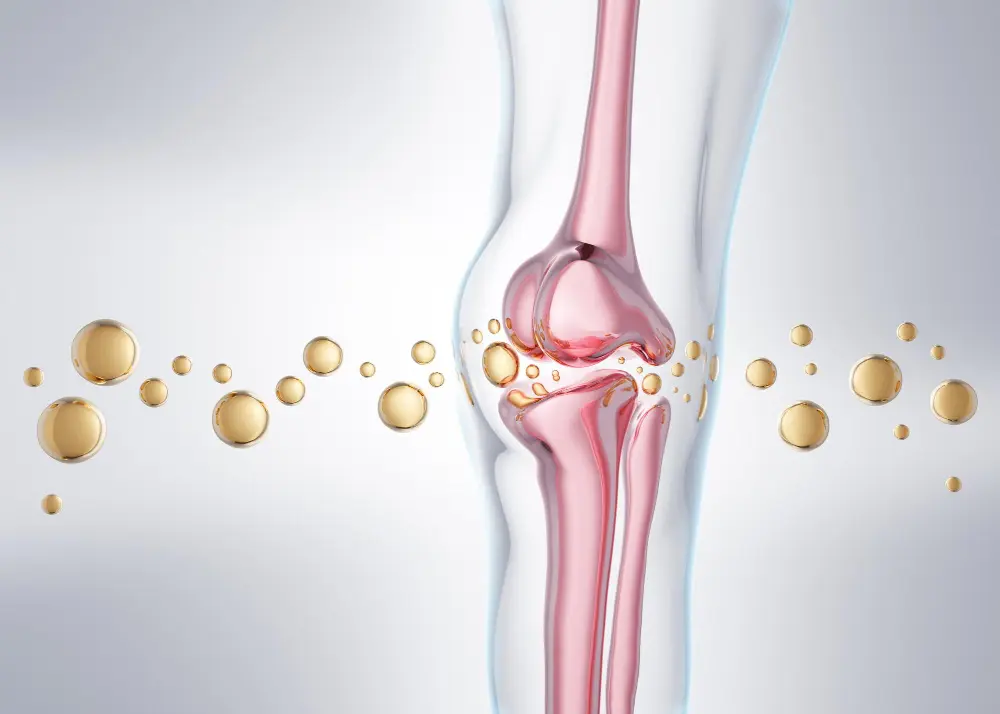
How well collagen works also depends on which joint is affected. "The most convincing scientific evidence currently exists for knee osteoarthritis," says Berthold. "Several studies show that collagen can somewhat reduce pain and stiffness in the knee."
Less is known for other conditions. "For ankle or Achilles tendon problems, there are some interesting early findings, often in combination with exercise. For shoulder complaints, on the other hand, only limited reliable data are available so far."
Berthold therefore urges caution: "I would not simply carry the positive results from the knee over to other joints. What matters is always what the studies actually show for the specific condition in question."
This is precisely what many people hope for when they take collagen for their joints: that the body will use it to repair worn cartilage. But according to Berthold, this is "probably the biggest misconception."
"After ingestion, collagen is first broken down by digestion and does not reach the joint as finished cartilage," says the orthopedic surgeon. "Based on current knowledge, there is no convincing evidence that collagen rebuilds destroyed joint cartilage or reverses osteoarthritis."
That does not mean taking it has no biological effect whatsoever, however. "Certain collagen peptides likely influence metabolic processes in cartilage and connective tissue," says Berthold. "The potential benefit therefore lies more in moderately reducing pain and supporting joint function – not in generating new cartilage."
Anyone who wants to trycollagen should not pass judgment after just a few days. "Most studies on hydrolyzed collagen peptides use around five to ten grams per day," says Berthold.
The duration of intake matters at least as much as the amount. "Anyone who wants to give collagen a fair trial should take it consistently for at least eight to twelve weeks. Many studies even ran for three to six months."
That said, there is no need to keep taking the supplement indefinitely if nothing changes. Berthold: "If there is no improvement in symptoms after about three months, further benefit is unlikely."
Type I, Type II, hydrolyzed, or undenatured: the range of collagen supplements on the market is enormous.
"Hydrolyzed collagen peptides and undenatured type II collagen work through different mechanisms. However, there are currently no convincing data showing that one type of collagen is fundamentally superior to the other," explains Berthold.
When making a purchase, he recommends "paying less attention to marketing buzzwords and more to transparent product information." This means looking for a clear quantity per daily dose, unambiguous labeling as hydrolyzed or undenatured collagen, a reputable manufacturer, and ideally an independent quality certification.
Berthold: "Anyone who promises to rebuild cartilage or cure osteoarthritis is claiming far more than the science supports."
However promising some of the results for collagen may be, the single most important measure for osteoarthritis cannot be taken as a powder.
"Movement and targetedstrength trainingremain the most important components of any conservative osteoarthritis therapy," emphasizes Berthold. He therefore sees collagen not as an alternative but as a possible complement. "Some studies suggest that combining exercise with collagen can achieve better results than collagen alone."
He adds: "For combinations with hyaluronic acid injections or platelet-rich plasma therapies, only limited reliable scientific data are currently available."
But what does a "moderate effect" actually mean for someone whose knee hurts every time they climb stairs? Berthold recalls a patient with mild to moderate knee osteoarthritis whose symptoms occurred mainly when climbing stairs and walking for longer stretches.
Alongside a structured strength training program, she chose to take collagen regularly. "After about three months, she reported less start-up pain and greater resilience in daily life."
There is one point Berthold is careful to add: "This does not allow us to conclude that her cartilage had regenerated."
His overall assessment is correspondingly measured: "The foundation of everyosteoarthritis treatmentremains movement, targeted strength training, and individually tailored therapy. Collagen can meaningfully complement these measures – but it cannot replace them."

Collagen is frequently recommended for joint pain – often with the promise that it can strengthen or even rebuild cartilage. A large scientific review now paints a more nuanced picture. Orthopedic surgeon PD Dr. Daniel Berthold explains who may benefit from collagen – and what these supplements cannot do.
Christine Bürg & Marianne Waldenfels

With
PD Dr. med. Daniel P. Berthold

Significant weight loss changes the body – and the skin can't always keep up. Plastic surgeon Dr. Alexander Heinrich explains when body contouring makes sense, why he sees function and aesthetics as inseparable – and why he sometimes advises against surgery.
Christine Bürg & Marianne Waldenfels

An interview with
Dr. Alexander de Heinrich

Better sperm through biohacking? That's exactly what the trend known as "spermmaxxing" promises. Urologist Dr. Daniel Kaminski explains which methods fall short — and what can actually influence sperm quality.
Christine Bürg & Marianne Waldenfels

With
Dr. med. Daniel Kaminski