© Elly Fairytale
Certain yoga poses can help promote better, deeper sleep
August 22, 2026
Birgitta Dunckel
Exhausted in the evening but your mind just won't quiet down? Yoga may help you unwind and make it easier to fall asleep. Here's what studies show about its effects on sleep — plus four calming poses to try before bed.
Tired at bedtime — and suddenly the mind is wide awake. Thoughts keep circling, the body won't settle. That's exactly when a short evening yoga routine can help you switch off.
Yoga combines slow movements with mindful breathing and relaxation. There is genuine scientific evidence that regular yoga can improve sleep quality — though it is not a miracle cure for sleep disorders.
The research is more compelling than you might expect from what seems like a simple bedtime ritual. A large systematic review of 19 studies involving a total of 1,832 participants concluded that yoga can improve subjective sleep qualityHowever, the results were not equally consistent across all groups studied, and no definitive effect was found regarding the severity of insomnia.
More recent studies also suggest that yoga could be helpful for sleep problems. A network meta-analysis published in 2025, which examined various forms of exercise in people with insomnia, found evidence that yoga could extend sleep duration and shorten the time it takes to fall asleep, among other benefits.
There are now also initial positive findings for Yoga Nidra, a guided form of deep relaxation. However, a meta-analysis published in 2026 rates the existing evidence as highly uncertain: the groups studied were small, and the studies differed considerably from one another in several respects.
The bottom line: yoga can be a valuable addition to a relaxing evening routine, but it does not replace treatment for chronic sleep disorders.
Doing an intense power yoga flow right before bed can easily have the opposite effect. In the evening, gentler styles such as Yin Yoga or Restorative Yoga are ideal — forms in which poses are held for longer and paired with slow, mindful breathing.
The goal isn't to be particularly flexible or to execute a pose perfectly. The exercises should feel comfortable and never cause pain. Even just a few positions can help create a mindful transition between a hectic day and a good night's rest.
The following four exercises are suitable for beginners as well.
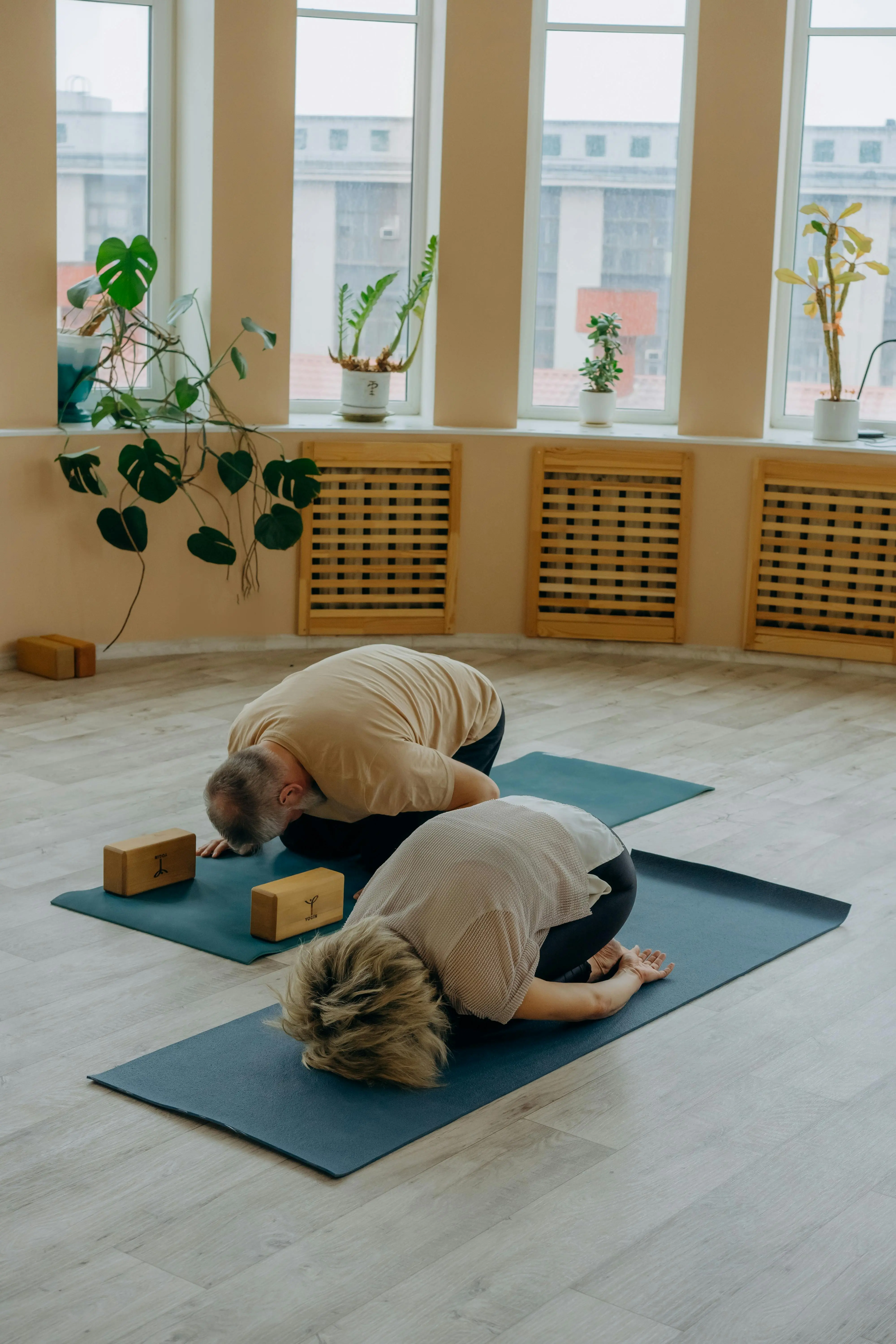
Balasana is one of the most restorative positions in yoga. The upper body folds forward, the eyes can close — it's a pose in which many people naturally begin to breathe a little more slowly and mindfully.
How to do it: Sit back on your heels and slowly lower your upper body forward. Rest your forehead on the mat. Your arms can lie relaxed alongside your body or be stretched out in front of you. Breathe calmly and hold the position for about 30 seconds to a few minutes — for as long as it feels comfortable.
If you can't comfortably reach the floor with your forehead, place a cushion or yoga block underneath.

© mikhail-nilov
Calms body and mind: Balasana, Child's Pose
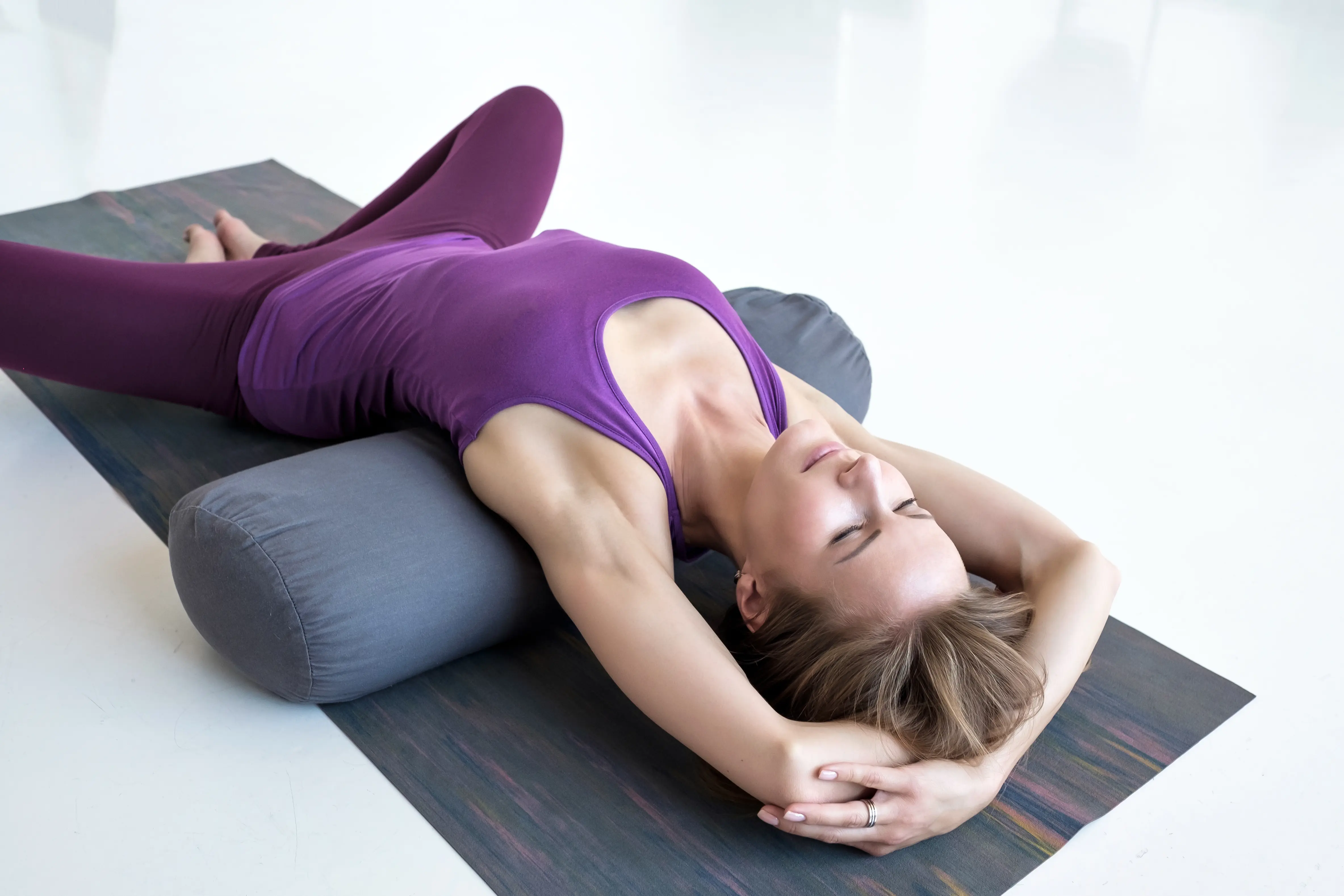
In this position, the body rests comfortably on the back. The soles of the feet touch while the knees drop out to the sides, gently stretching the hips and inner thighs, among other areas.
How to do it: Lie on your back, starting with both feet flat on the floor. Then slowly let your knees fall outward and bring the soles of your feet together. Your arms rest loosely alongside your body.
If you feel an uncomfortable pull in the hip or groin, placing cushions under your knees can make the position significantly more relaxing. Close your eyes and focus on your breathing for a few minutes.

© Freepik
Opens the chest and relieves stress: the Reclining Butterfly Pose
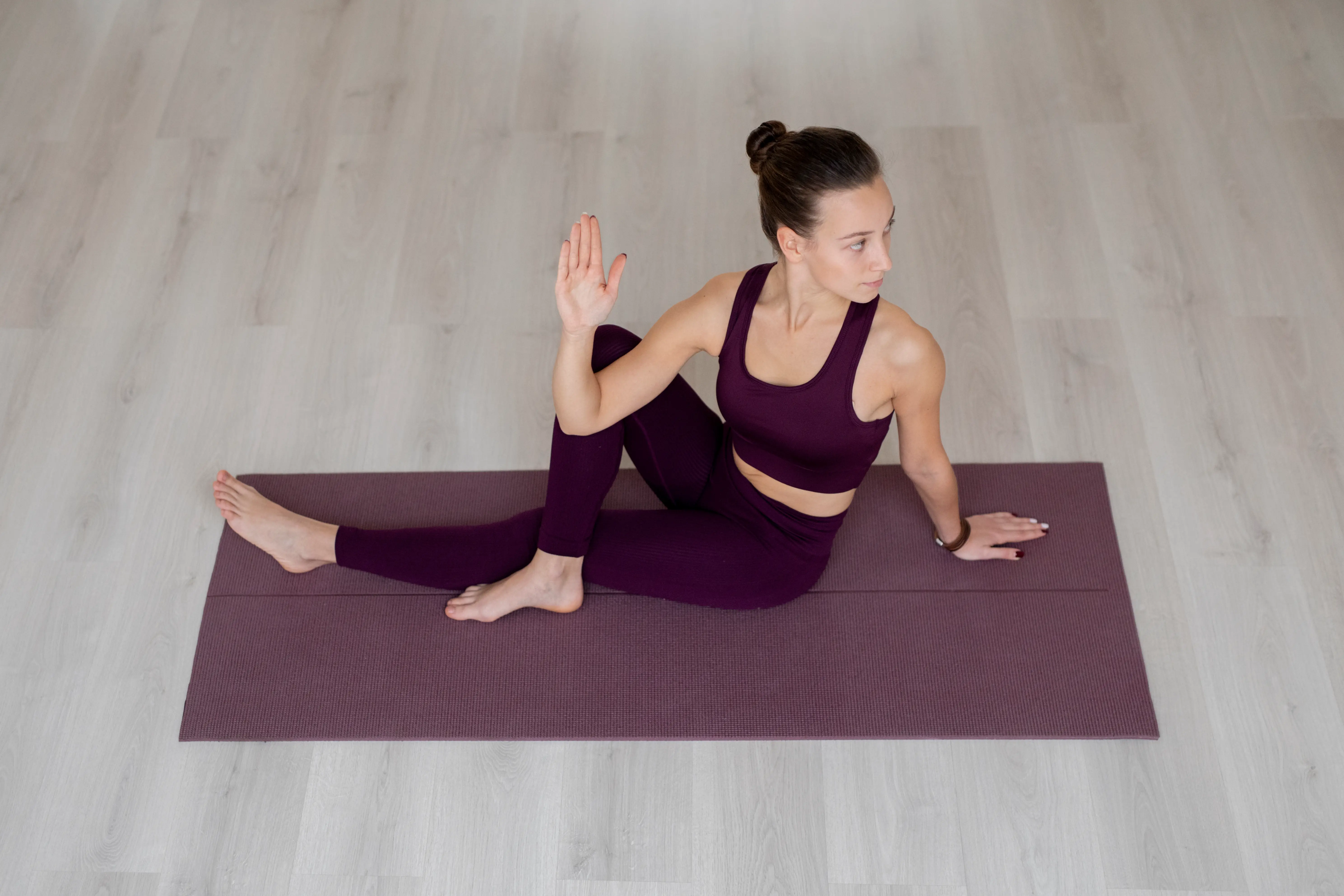
The half spinal twist introduces a gentle rotation into the upper body and mobilizes the spine. In the evening, the aim is not to twist as far as possible — the movement should stay slow, controlled, and comfortable.
How to do it: Sit on the mat and begin with both legs extended in front of you. Place your right foot on the outside of your left knee. The left leg can remain extended or be bent. On an inhale, lengthen your spine, then gently rotate your upper body to the right. Your right hand supports you from behind, while your left arm can loosely wrap around your right knee.
Continue breathing calmly and hold the position for a few breaths without forcing the twist. Then slowly return to center and switch sides.

© Freepik
In the spinal twist, it's important that your sit bones are well grounded
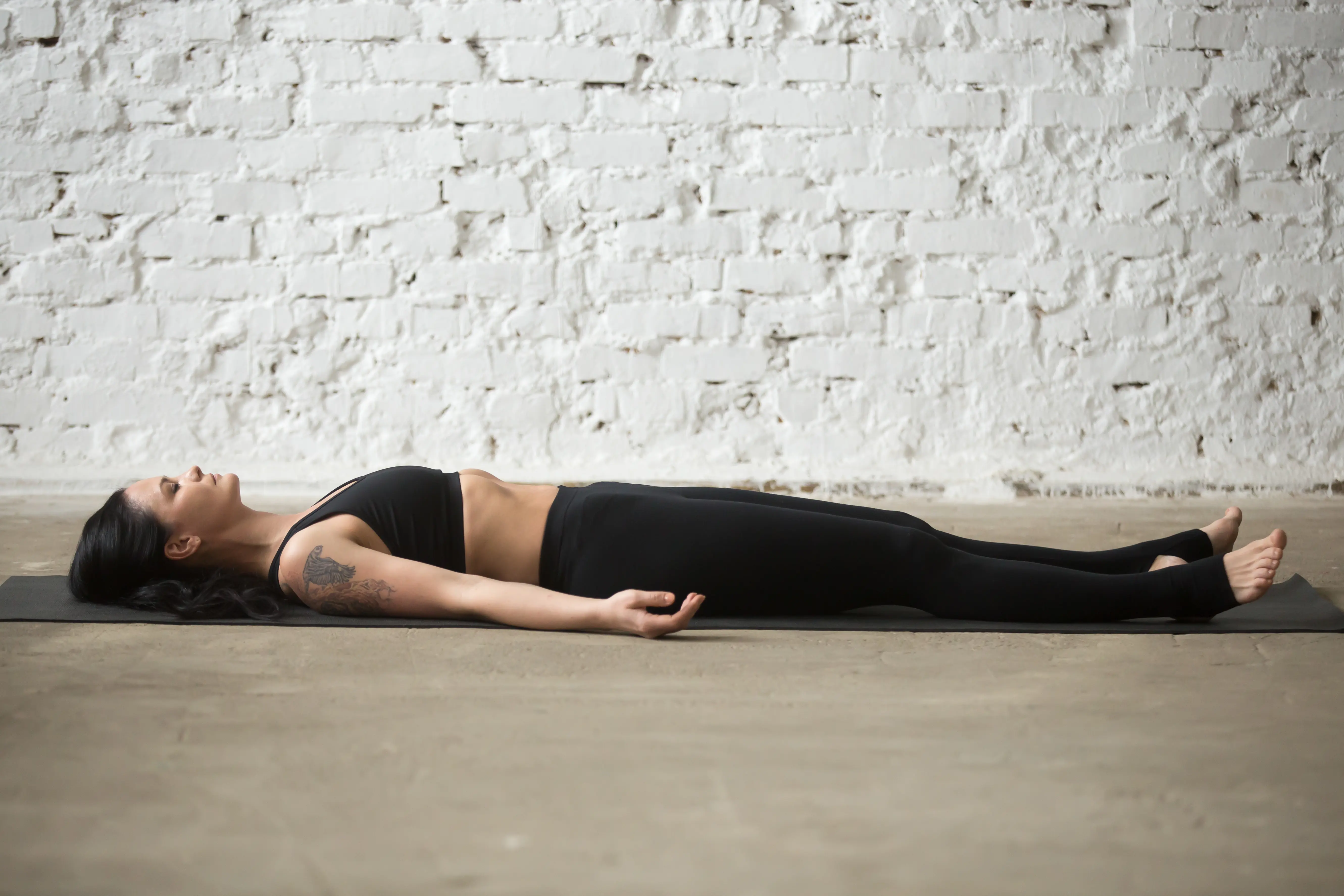
Shavasana traditionally comes at the end of a yoga class and looks about as simple as it gets: you lie on your back and don't move. That is precisely its appeal.
How to do it: Lie comfortably on your back, legs slightly apart, arms resting loosely alongside your body. Close your eyes and let your breath come and go without trying to consciously control it.
Don't pressure yourself to think about nothing. Thoughts are allowed to arise — what matters is not following them and gently bringing your attention back to your body or your breathing, again and again.
Stay in this position for five minutes or longer. If you're doing the exercises right before bed, you can also try Shavasana in bed.

© Freepik
Shavasana helps slow down the breath
There is no magic number of minutes. Studies on yoga and sleep examine very different programs and don't allow us to conclude, for example, that ten minutes of yoga is more effective than five or twenty.
For an evening routine, something else matters more: it should be simple enough that you actually stick with it. Even a few minutes of two or three gentle positions can establish a ritual that signals to the body — the active part of the day is over.
Anyone who has been struggling to fall or stay asleep over an extended period and feels impaired during the day as a result should consult a doctor about their symptoms.

One side of the face is suddenly paralyzed, the corner of the mouth droops, and the eye can no longer close properly: facial palsy can strike without any warning. ENT specialist Prof. Christopher Bohr explains the chances of recovery and why prompt evaluation is so important
Christine Bürg & Marianne Waldenfels

An interview with
Prof. Dr. Christopher Bohr

A mini dose of Ozempic, Wegovy, or Mounjaro is said to promote weight loss while reducing side effects. Endocrinologist Dr. Alexandra Schoeneich explains what’s behind the microdosing trend – and where its medical limits lie.
Christine Bürg & Marianne Waldenfels

With
Dr. med. Alexandra Schoeneich