© Magnific-KI
Pilonidal Sinus
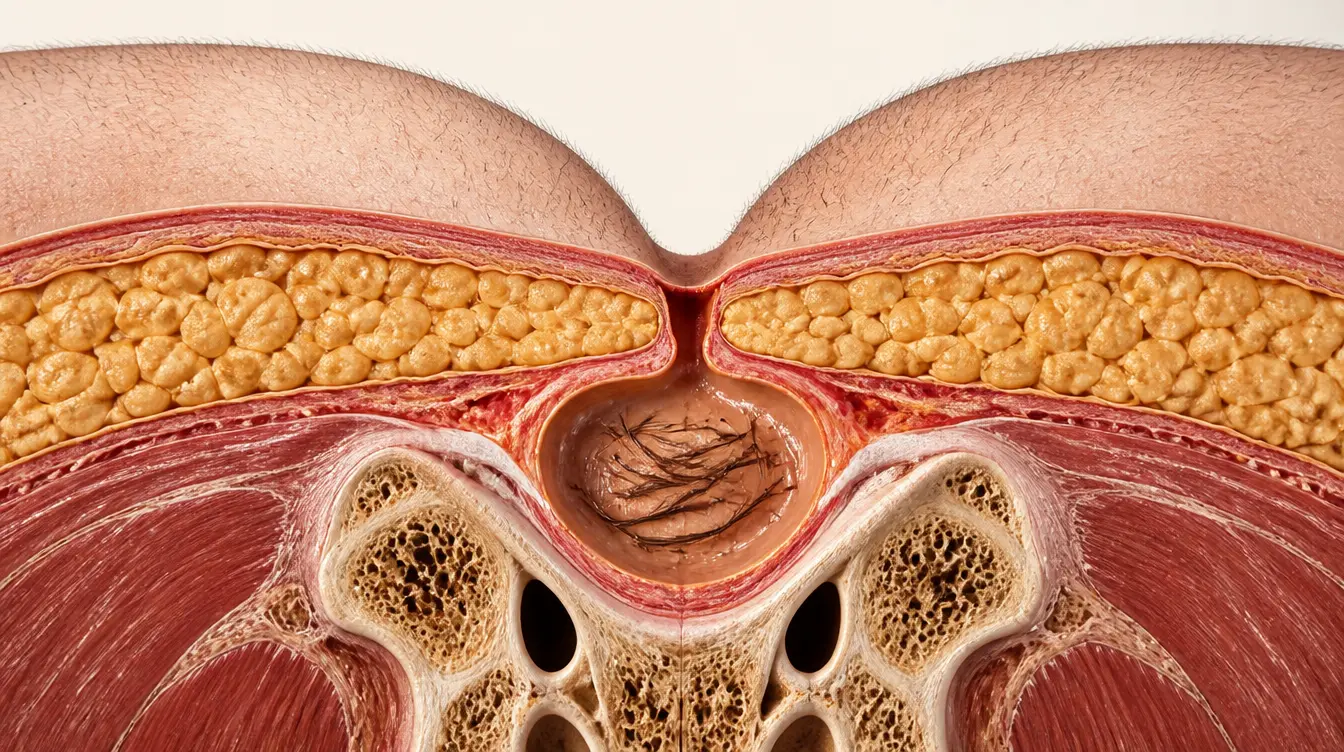
A pilonidal sinus, also known as a coccygeal fistula, develops in the gluteal cleft. Small hairs can burrow into the skin in this area, triggering a chronic inflammatory response. Over time, small openings or tracts form beneath the skin, which can become repeatedly inflamed. Some people notice nothing more than a small opening in the gluteal cleft, while others experience recurring discharge, pain, or acute abscesses.
Modern Therapy with the Smallest Possible Wounds
When an acute abscess is present, the inflammation must be addressed and the abscess drained before any further treatment. For a chronic pilonidal sinus, the appropriate approach depends on the size and extent of the condition. In the past, large areas were frequently excised, leaving correspondingly large wounds. Today, far less invasive procedures are available for suitable cases. Small fistula openings can, for example, be precisely removed and the underlying tracts cleared out. For larger or recurrent cases, other surgical approaches may be more appropriate. The goal of modern treatment is the most reliable healing possible, combined with the smallest wound area and the shortest disruption to daily life.
Other Treatment Methods in this Department
Experts for this Treatment Method
All Experts in this Department
Show All
- Modern Abdominal Surgery
Dr. Birgit Dinnewitzer
Dr. Birgit Dinnewitzer
- Modern Abdominal Surgery
Dr. med. Felix Hemminger
Enddarmzentrum München-Bavaria
- Modern Abdominal Surgery
Prof. Dr. med. Carina Riediger, MSc
Marienhospital Stuttgart
- Modern Abdominal Surgery