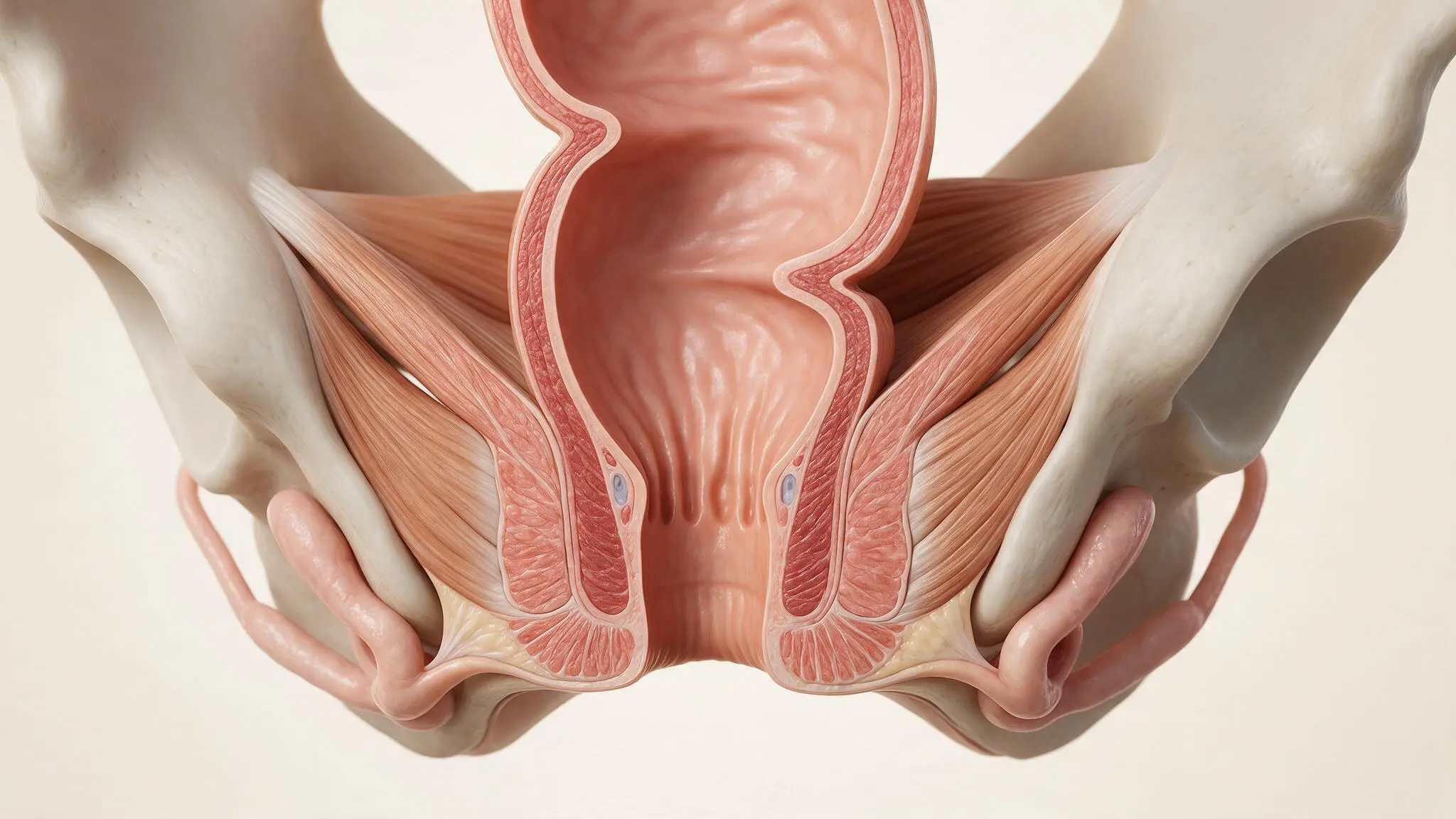
© Magnific-KI
Fecal Incontinence
The involuntary loss of gas, liquid, or solid stool is a source of profound shame for many of those affected. Yet fecal incontinence is far from rare — and, more importantly, it is not something that simply has to be accepted. The causes are varied. Sphincter muscle damage, such as that resulting from childbirth or surgery, can be a factor, as can changes in nerve function, chronic bowel diseases, or a pelvic floor that weakens with age. In many cases, more than one cause is present at the same time.
Precise Diagnostics Are Essential
Continence depends on far more than the sphincter muscle alone. The rectum, pelvic floor, nerves, and stool consistency must all work together with precision. For this reason, a thorough and differentiated examination is the foundation of any successful treatment. Alongside a detailed consultation and proctological examination, further assessments of sphincter function or an ultrasound may be necessary depending on the individual situation.
Treatment Based on a Step-by-Step Approach
Treatment is guided by the underlying cause and the severity of the condition. In many cases, meaningful improvement can already be achieved through targeted regulation of stool consistency, dietary adjustments, and pelvic floor training. Where these measures prove insufficient, a range of more specialized treatment options is available. An individualized approach is essential: the focus is not on any single diagnostic method or surgical procedure, but on identifying which combination of measures will best restore control and quality of life for each individual patient.
Other Treatment Methods in this Department
Experts for this Treatment Method
All Experts in this Department
Show All
- Modern Abdominal Surgery
Dr. Birgit Dinnewitzer
Dr. Birgit Dinnewitzer
- Modern Abdominal Surgery
Dr. med. Felix Hemminger
Enddarmzentrum München-Bavaria
- Modern Abdominal Surgery
Prof. Dr. med. Carina Riediger, MSc
Marienhospital Stuttgart
- Modern Abdominal Surgery