© Magnific-KI
Anal Dysplasia
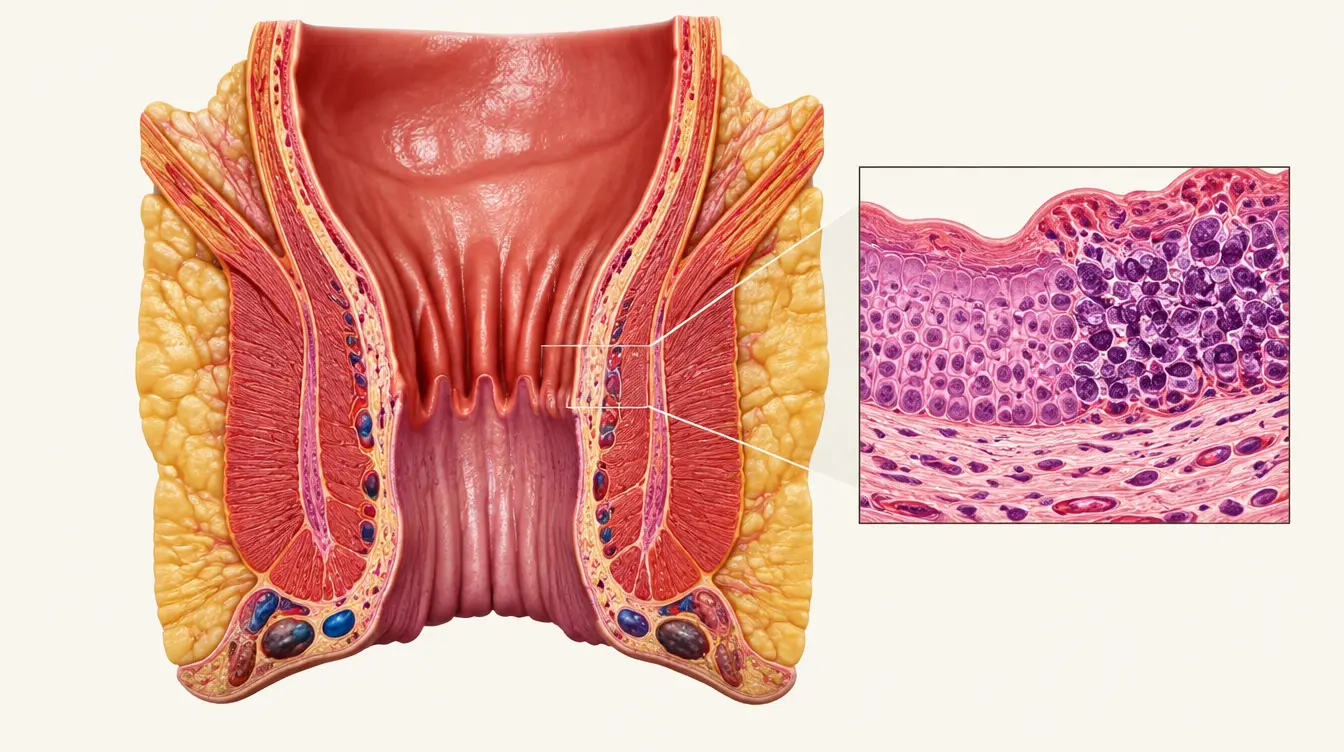
Certain strains of human papillomavirus — HPV — can cause cellular changes in the anal region. These changes, known as anal dysplasias, are not yet cancer. However, high-grade cellular changes can progress into anal carcinoma over the course of years.
This is exactly where modern preventive care plays a role: detecting and treating abnormal cells before they have the chance to develop into cancer.
HRA: Detecting Changes That Are Barely Visible to the Naked Eye
One particularly precise diagnostic tool is high-resolution anoscopy, or HRA.
It is internationally recognized as the most important procedure for the targeted diagnosis of anal dysplasia. At the same time, HRA is currently available at only a relatively small number of specialized centers in Germany.
The Enddarmzentrum München-Bavaria offers this specialized HRA diagnostic capability, enabling precise assessment of even very small mucosal changes that would be difficult to detect with a standard examination.
How Does HRA Work?
The examination begins much like a standard proctological exam. A small instrument is used to gently open the anal canal, after which the mucosa is examined under high magnification using a high-resolution optical system.
A diluted acetic acid solution is then applied. Abnormal areas of the mucosa change in appearance as a result, making them easier to identify under magnification. An iodine solution may also be used to make the differences between healthy and altered mucosa even more apparent.
Suspicious areas can then be selectively sampled. Only the histological examination of these small tissue samples can reliably determine whether cellular changes are present and, if so, to what degree.
The key advantage: rather than simply flagging an abnormal smear result, HRA allows clinicians to actively locate the specific change responsible for it.
Preventing Cancer Rather Than Treating It
When high-grade cellular changes are caught in time, they can be treated in a targeted manner and monitored going forward — offering the opportunity to address a potential malignancy at the precursor stage. HRA therefore combines early detection, precise diagnostics, and targeted treatment planning. For people at increased risk of HPV-related cellular changes in particular, it represents an essential component of modern anal cancer prevention.
Other Treatment Methods in this Department
Experts for this Treatment Method
All Experts in this Department
Show All
- Modern Abdominal Surgery
Dr. Birgit Dinnewitzer
Dr. Birgit Dinnewitzer
- Modern Abdominal Surgery
Dr. med. Felix Hemminger
Enddarmzentrum München-Bavaria
- Modern Abdominal Surgery
Prof. Dr. med. Carina Riediger, MSc
Marienhospital Stuttgart
- Modern Abdominal Surgery