© Magnific-KI
Anal Abscesses and Anal Fistulas
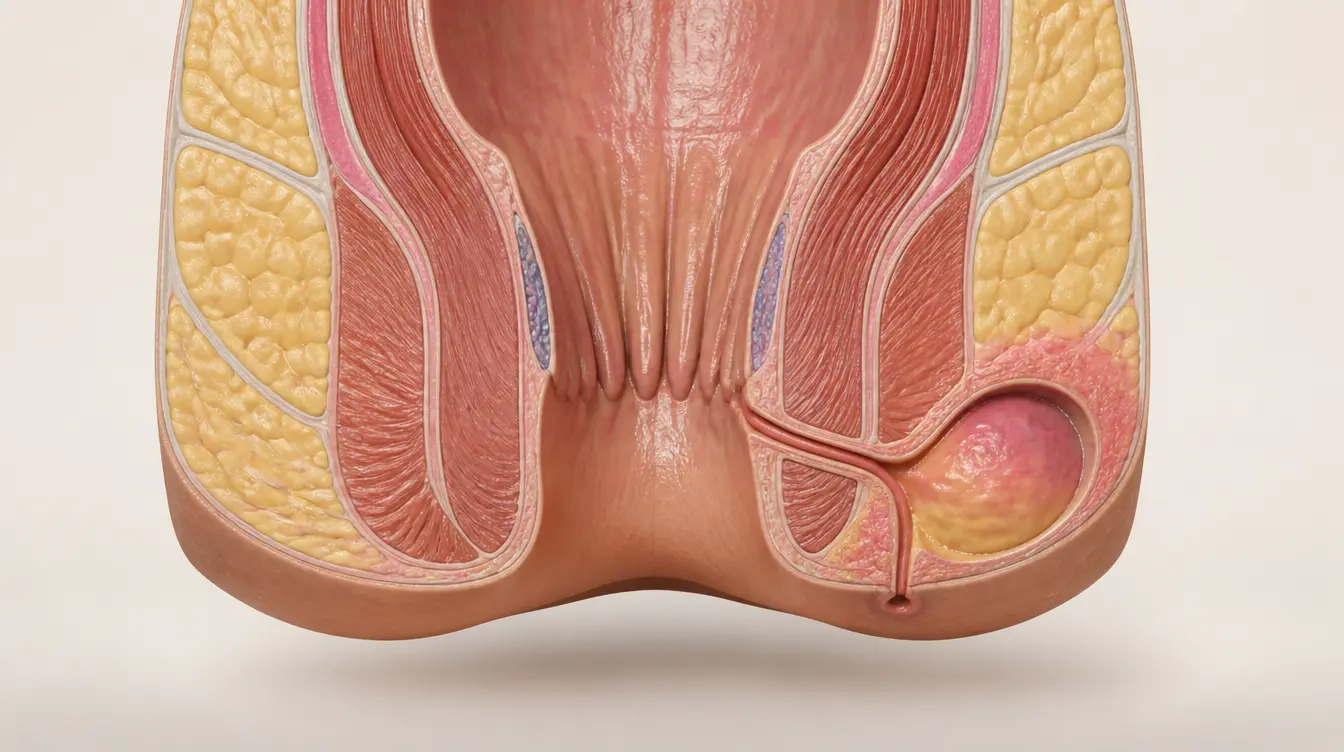
An anal abscess is an acute inflammation in the tissue surrounding the anus, in which pus accumulates. Typical signs include worsening pain, swelling, and sometimes fever or a general sense of illness. An abscess of this kind should be treated promptly — as a rule, the pus must be released by opening and draining it through a minor surgical procedure.
When an Abscess Becomes a Fistula
An anal abscess is often caused by the inflammation of a small gland in the anal canal. This inflammation can give rise to a narrow channel connecting the anal canal to the skin — known as an anal fistula. On the outside, this typically appears as a small opening beside the anus from which fluid or pus repeatedly discharges. Some fistulas cause only mild discomfort, while others lead to recurring inflammation and abscesses.
The Right Surgery Depends on the Course of the Fistula
When treating an anal fistula, the critical factor is how the fistula tract relates to the sphincter muscle. Simple fistulas can often be opened completely and thereby permanently eliminated. For more complex fistulas, particular care must be taken to preserve the sphincter muscle, and a range of sphincter-sparing surgical techniques are available for this purpose. Thorough diagnostics and extensive experience in proctological surgery are therefore especially important: the goal is not only to heal the fistula, but also to preserve continence as fully as possible.
Other Treatment Methods in this Department
Experts for this Treatment Method
All Experts in this Department
Show All
- Modern Abdominal Surgery
Dr. Birgit Dinnewitzer
Dr. Birgit Dinnewitzer
- Modern Abdominal Surgery
Dr. med. Felix Hemminger
Enddarmzentrum München-Bavaria
- Modern Abdominal Surgery
Prof. Dr. med. Carina Riediger, MSc
Marienhospital Stuttgart
- Modern Abdominal Surgery