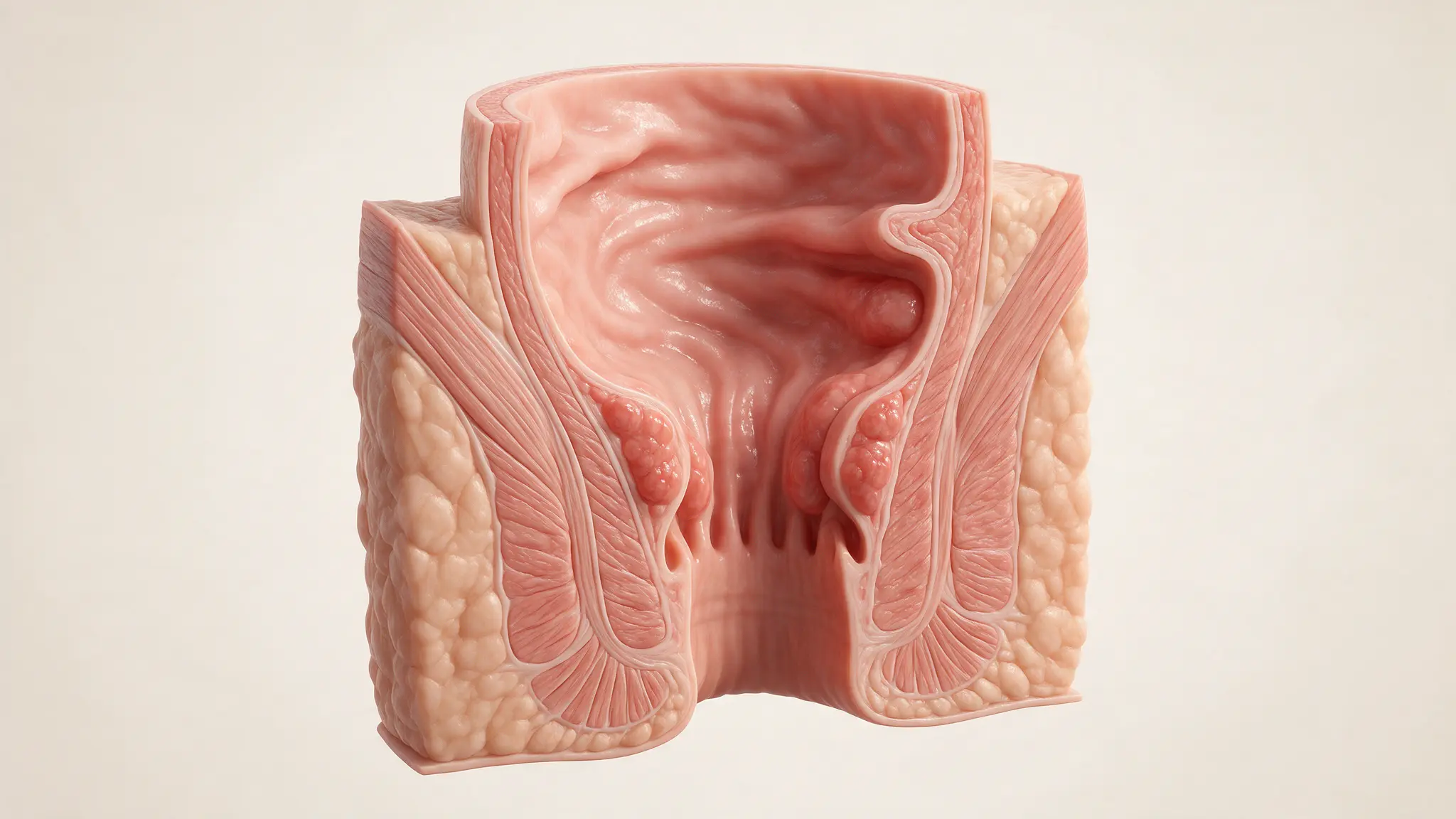
© Magnific-KI
Hemorrhoids
Everyone has hemorrhoids. They are well-supplied vascular cushions at the exit of the rectum that, together with the sphincter muscle, ensure the secure closure of the anus. It is only when these cushions enlarge and cause discomfort that the condition is referred to as hemorrhoidal disease. Typical symptoms include bright red bleeding during bowel movements, itching, burning, weeping, or the sensation of tissue protruding from the anus during bowel movements.
Not Every Case of Hemorrhoidal Disease Requires Surgery
Modern hemorrhoid treatment offers a broad spectrum of options. The appropriate therapy depends on the size of the hemorrhoids, the symptoms, and the individual needs of the patient. For milder symptoms, regulating bowel movements, following a high-fiber diet, and using ointments or suppositories on a temporary basis may already be sufficient. Enlarged hemorrhoids can also be treated with sclerotherapy on an outpatient basis: a small amount of medication is introduced directly into the hemorrhoidal tissue. Another well-established option is rubber band ligation, in which a small rubber ring is placed around a portion of the excess tissue, which then sheds. Surgical procedures are reserved for more pronounced findings or when gentler methods fail to achieve the desired outcome. This broad spectrum makes a highly individualized approach to treatment possible — ranging from conservative therapy to surgery.
Radiofrequency Ablation – Gentle Treatment Without Conventional Hemorrhoid Surgery
A valuable addition to this treatment spectrum is radiofrequency ablation. For selected patients, it can serve as an alternative that sits between conventional outpatient procedures and major surgery. A very fine probe is inserted into the enlarged hemorrhoidal tissue, through which radiofrequency energy is delivered in a controlled manner. The heat generated targets the hemorrhoidal tissue, which then shrinks over the following weeks. The key difference from conventional hemorrhoid surgery is that the hemorrhoidal tissue is not excised over a large area, and the sensitive skin around the anus is largely preserved. For suitable patients, this approach offers several advantages: the procedure is comparatively tissue-sparing, the wounds are small, and post-procedural discomfort may be less than after conventional surgery — often allowing for a faster return to everyday activities. Whether radiofrequency ablation is appropriate depends on the individual findings, as not every case of hemorrhoidal disease is suitable for it. This is precisely why it is advantageous when a specialized center offers the full spectrum of hemorrhoid treatments and the approach is not predetermined by a specific procedure.
Other Treatment Methods in this Department
Experts for this Treatment Method
All Experts in this Department
Show All
- Modern Abdominal Surgery
Dr. Birgit Dinnewitzer
Dr. Birgit Dinnewitzer
- Modern Abdominal Surgery
Dr. med. Felix Hemminger
Enddarmzentrum München-Bavaria
- Modern Abdominal Surgery
Prof. Dr. med. Carina Riediger, MSc
Marienhospital Stuttgart
- Modern Abdominal Surgery