© Deane Bayas
January 20, 2025
Marianne von Waldenfels
Bananas with parsley, oysters with kiwi, or white chocolate with caviar? Food pairing is based on the idea that ingredients sharing similar aroma compounds often complement each other. Here's the science behind these unexpected flavor combinations.
Banana with parsley. White chocolate with caviar. Oysters with kiwi. What sounds at first like a kitchen accident often follows a scientific principle. Food pairing is built on the idea that ingredients harmonize particularly well when they share similar aroma molecules. But does it really work — or is it just a gourmet myth?
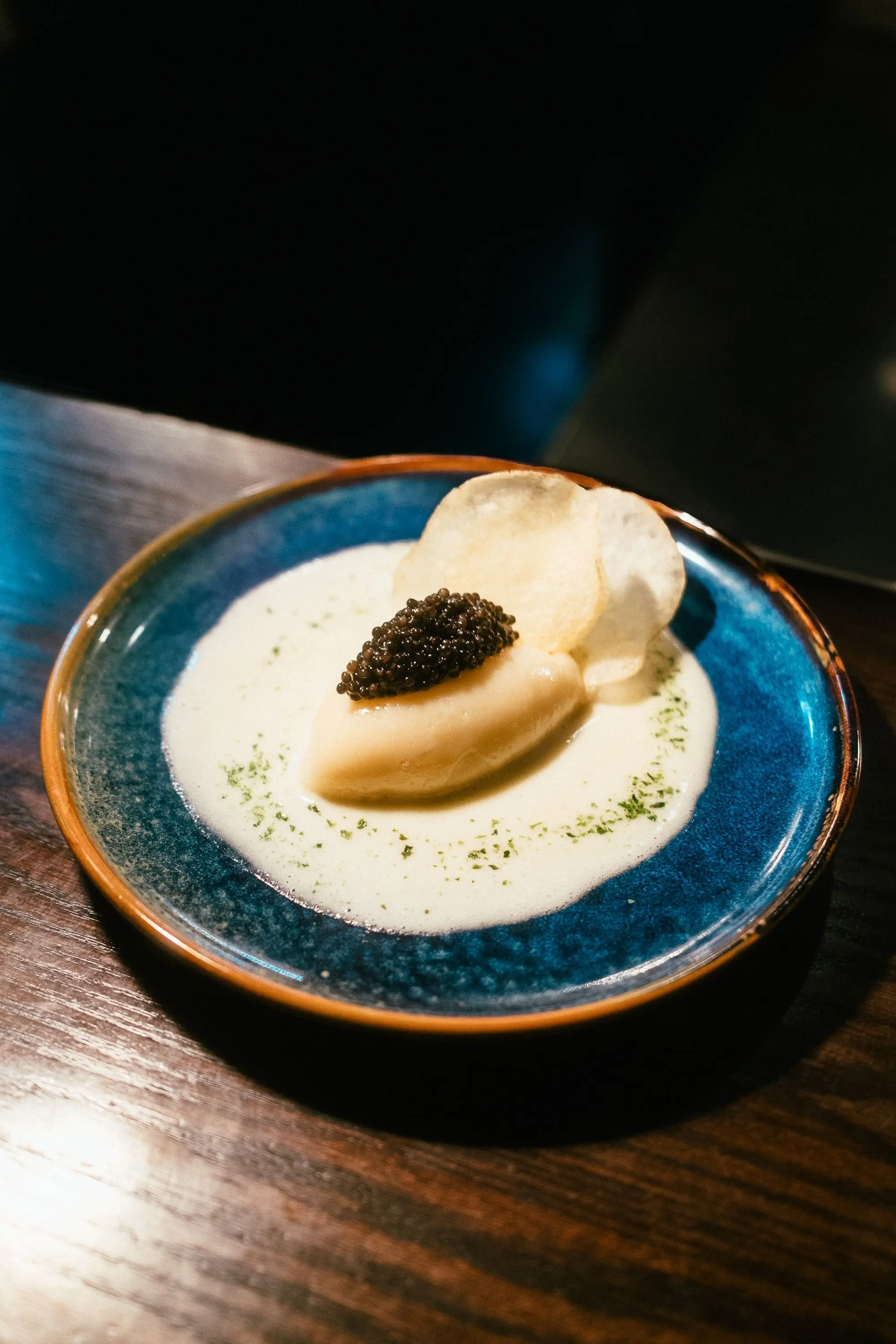
The term "food pairing" was coined after the celebrated chef Heston Blumenthal began experimenting with savory ingredients and chocolate in 1992 and discovered that caviar tastes surprisingly good with white chocolate. At the time, the three-Michelin-starred British chef had no explanation for why this was the case.
He reached out to perfumer and food technologist François Benzi and shared his discovery. Using a gas chromatograph, Benzi was able to pinpoint exactly why the two ingredients work so well together.
White chocolate and caviar both contain the compound trimethylamine, which is what makes them flavor relatives. In food, as in life, the chemistry has to be right. As it turned out, Benzi had already encountered something similar to Blumenthal's discovery — right in his own garden.
While smelling a jasmine bush, he suddenly detected a hint of liver. Benzi analyzed the substances involved and found that the aromas of both are built primarily around the chemical molecule indole. He brought the two together on a plate — and was delighted with the result.
Blumenthal and Benzi expanded their research and made culinary history. Together they developed "food pairing trees" — visual maps showing which spices and ingredients work especially well in combination.
To this day, Blumenthal is the owner of the legendary restaurant "The Fat Duck" near London, where he is known for surprising his guests with extraordinary combinations that engage the palate in entirely new ways — such as dark chocolate paired with blue cheese. According to Blumenthal, these two share 73 aromatic components.
What sets food pairing apart from conventional trial and error is that it is grounded in scientific research. As in molecular gastronomy, ingredients are broken down into their components, their key aromas are isolated and then compared with one another.
Scientists catalogue individual aromas in databases. More than 10,000 have already been decoded, giving rise to millions of possible combinations. Great taste, it turns out, has quite a lot to do with physics and chemistry.
At some point, Spanish celebrity chef Ferran Adrià began experimenting not only with different aromas but also with a range of textures and states of matter. At "El Bulli", physical and chemical processes were used to create dishes such as liquids set into gels or preparations finished with liquid nitrogen — combining the most contrasting aromas and engaging the taste buds in entirely new ways.

© Volker Debus
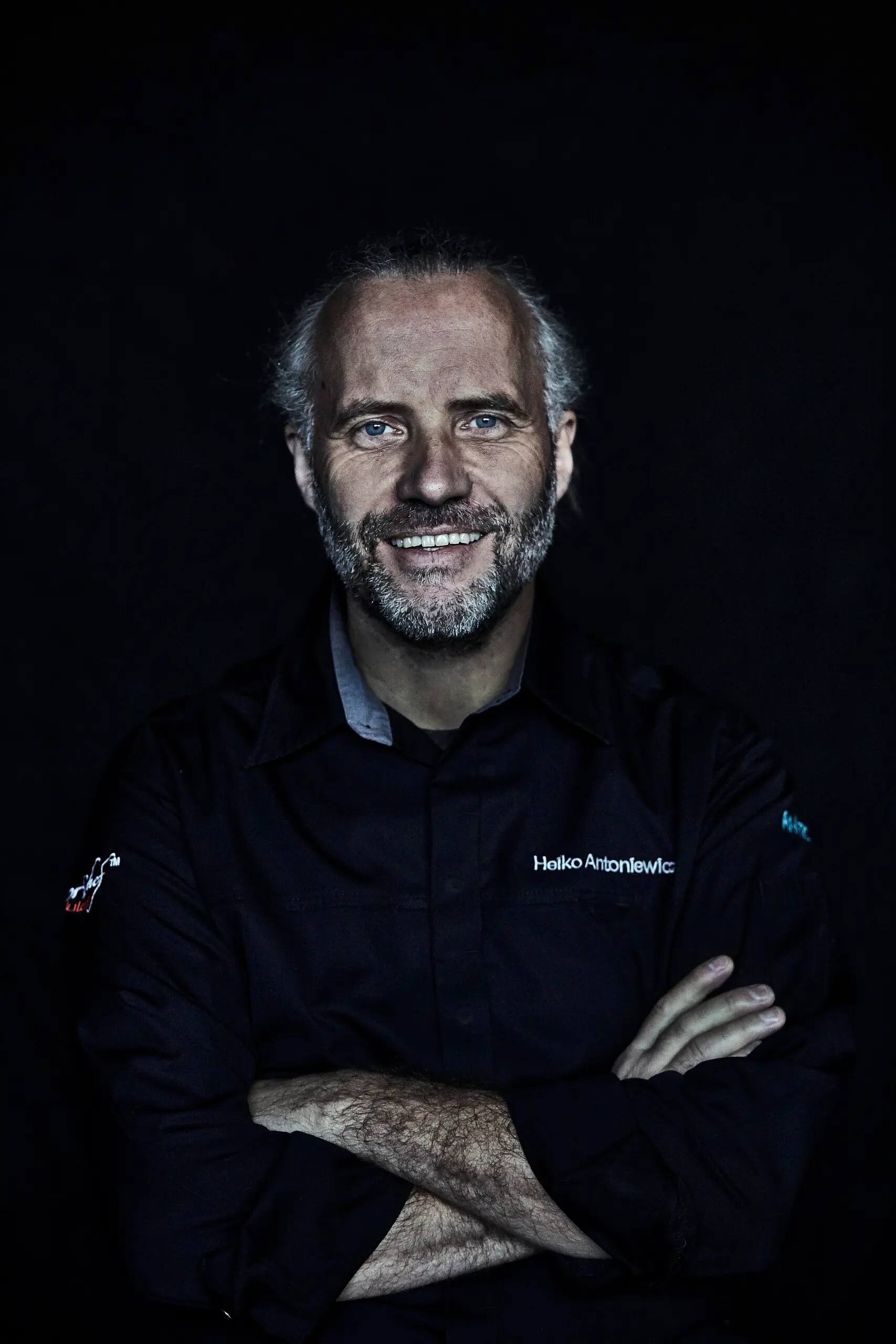
Heiko Antoniewicz – Visionary and Exceptional Chef
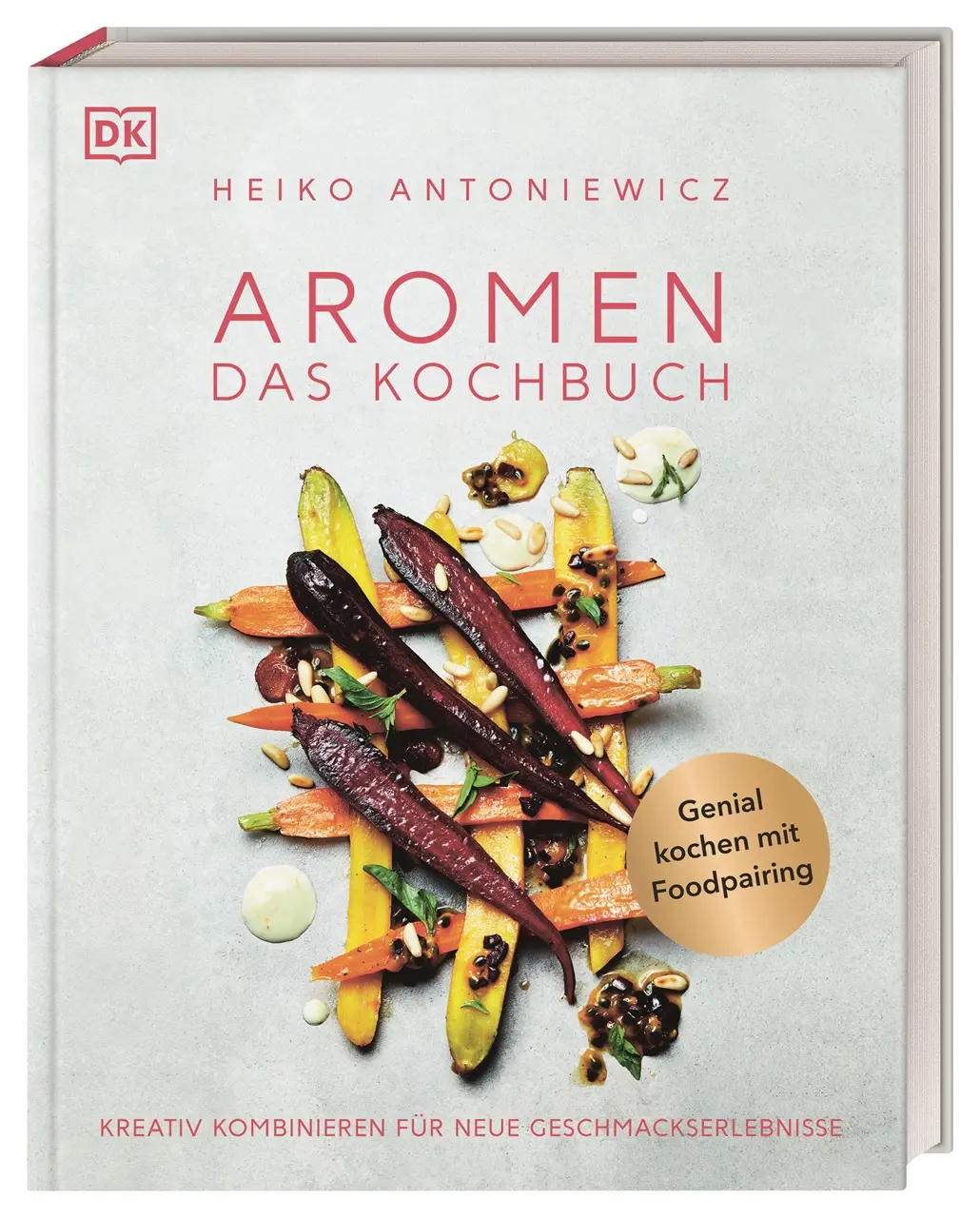
Regarded as a trailblazer and visionary, Antoniewicz is one of the most innovative chefs in the country. He has explored the topic of food pairing in depth, including in his cookbook "Aromen" (Dorling Kindersley).
What is your definition of food pairing?
The deliberate harmonizing of ingredients. It is a trend that bridges gut feeling and scientific analysis — in other words, the study of aroma harmony and flavor enhancement.
Food pairing, however, is not just about combining aromas — it's also about experimenting with textures and consistencies.
What categories are aromas divided into?
We distinguish between seven aroma groups: citrusy, fruity-tart, floral-fresh, vanilla-like, cinnamon-like, woody, and roasted.
Do you consult scientists when creating new recipes?
Yes. That said, science tends to confirm what I'm already doing and gives me new ideas. There's also nothing wrong with trusting your gut. When I was a little boy, I once ate Nutella and mustard together on impulse. Today I know exactly why that works — because hazelnuts and mustard pair very well together; they share the same aroma profiles.
Do you also work in the lab from time to time?
I've spent a great deal of time in sensory labs over the years, diving deep into the subject. They use gas chromatographs, which liquefy aroma compounds and allow them to be characterized sensorially.
In my own kitchen, I also use laboratory equipment that allows me to extract aroma compounds far more effectively — such as a rotary evaporator.
Is there a simple rule of thumb for food pairing?
Ingredients that share the same key aroma pair particularly well. Like enhances like.
Why do the most unlikely combinations often seem to taste the best?
Like enhances like, but so do contrasts. Take fish in mustard sauce, for example. We also like to add mint as a third ingredient, because it creates a greater arc of tension.
Anyone who only ever pairs ingredients with similar key aromas won't discover much that is new. It's worth being bold and trying combinations of seemingly contrasting aromas and flavors. I very often trust my intuition.
How do we perceive flavors?
Through the taste papillae on the tongue, each of which contains over 100 taste buds. These buds are somewhat reminiscent in structure of an inverted onion and contain sensory cells with taste receptors on their surface.
These receptors recognize individual molecules in food and relay the resulting signals to the brain. The sense of taste is clearly defined and falls into five categories: sweet, sour, salty, bitter, and umami.
It's also worth noting that the temperature at which a dish is served plays an important role. Temperature, too, can create tension.

In 90 extraordinary recipes, flavor expert and trailblazer Heiko Antoniewicz plays with aromas and conjures up daring, delicious creations such as cucumber salad with rhubarb or pea ragout with elderflower foam and roasted bacon. Dorling Kindersley
What role does the sense of smell play in flavor experiences, and in food pairing in particular?
A very significant one. Everything we taste is initially 80 percent aroma. Everyone knows this: when you have a cold, everything tastes somehow the same. That's because your nose is blocked and you can't smell anything.
My advice: be bold and play with aromas
The truth is that our best organ for tasting is actually the nose. That's why herbs are so popular in cooking — their scent travels directly to the limbic system and triggers an emotional response. The better food smells, the stronger the emotional connection we form with it.
Which combination could a food pairing beginner recreate fairly easily?
Warm ripe bananas with a little maple syrup in a pan, served with a sweet parsley pesto. Simply blend or finely grind flat-leaf parsley with simple syrup or sugar syrup.
Add a few peanuts for body and a little olive oil, then serve everything together. Bananas and parsley harmonize beautifully. My advice: be bold and play with aromas.
My basic rule: try, try, and try again. And sharpen your sense of taste by paying close attention to what the dish or ingredient you're currently eating actually tastes like.