© PR
"De Mains en Mains": The Students, Deeply Focused at Work
June 26, 2026
PMC Redaktion
Gold in hand, future in sight: Van Cleef & Arpels opens up a world of new possibilities for students in Lyon. Plus: exhibition tip MAK Vienna
Where strict discretion normally prevails, twelve- to fifteen-year-olds are permitted to work with a graining iron and tweezers once a year: bending real gold, sorting gemstones, setting a mount that would otherwise only be touched by experienced hands. Since 2021, Van Cleef & Arpels has regularly opened the doors of its otherwise closely guarded workshops in Lyon — welcoming students, career changers, and curious members of the public.
The "de Mains en mains" ("from hand to hand") initiative proves that the crafts of Haute Joaillerie are anything but outdated — and it addresses a very real challenge facing the industry: a shortage of young talent.
Lyon is no coincidental choice of location for Van Cleef & Arpels. The Maison operates several workshops in the region and now employs around 260 people there, with further growth on the horizon: two new sites in the Auvergne-Rhône-Alpes region are expected to create around 250 jobs each by 2026.
This presents the company with a challenge familiar to many luxury and craft businesses: highly specialized professions in jewelry making — such as stone setters, gemologists, and polishers — are barely known to the general public and are perceived as a closed, almost mysterious world.
This is precisely where "de Mains en mains" comes in. Since 2021, the company has been working with the French Ministry of Education, engaging schools in the Lyon region in a multi-month programme: from October onward, specialists from the Maison and its in-house educational institution L'École, School of Jewelry Arts, visit partner schools and weave professional content into the regular curriculum — covering, for example, the history of jewelry in history lessons, or the principles of casting through mass and volume calculations in mathematics.
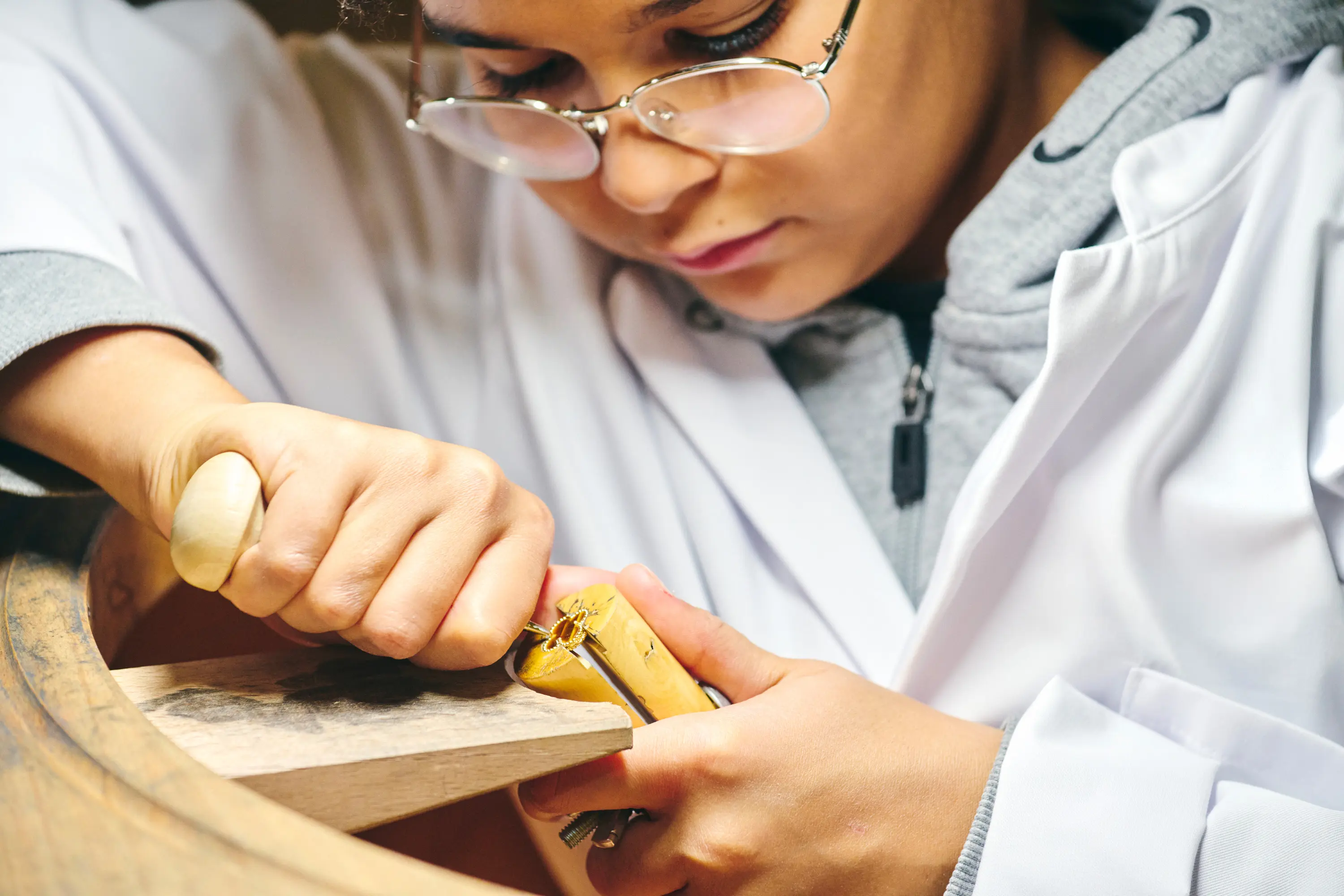
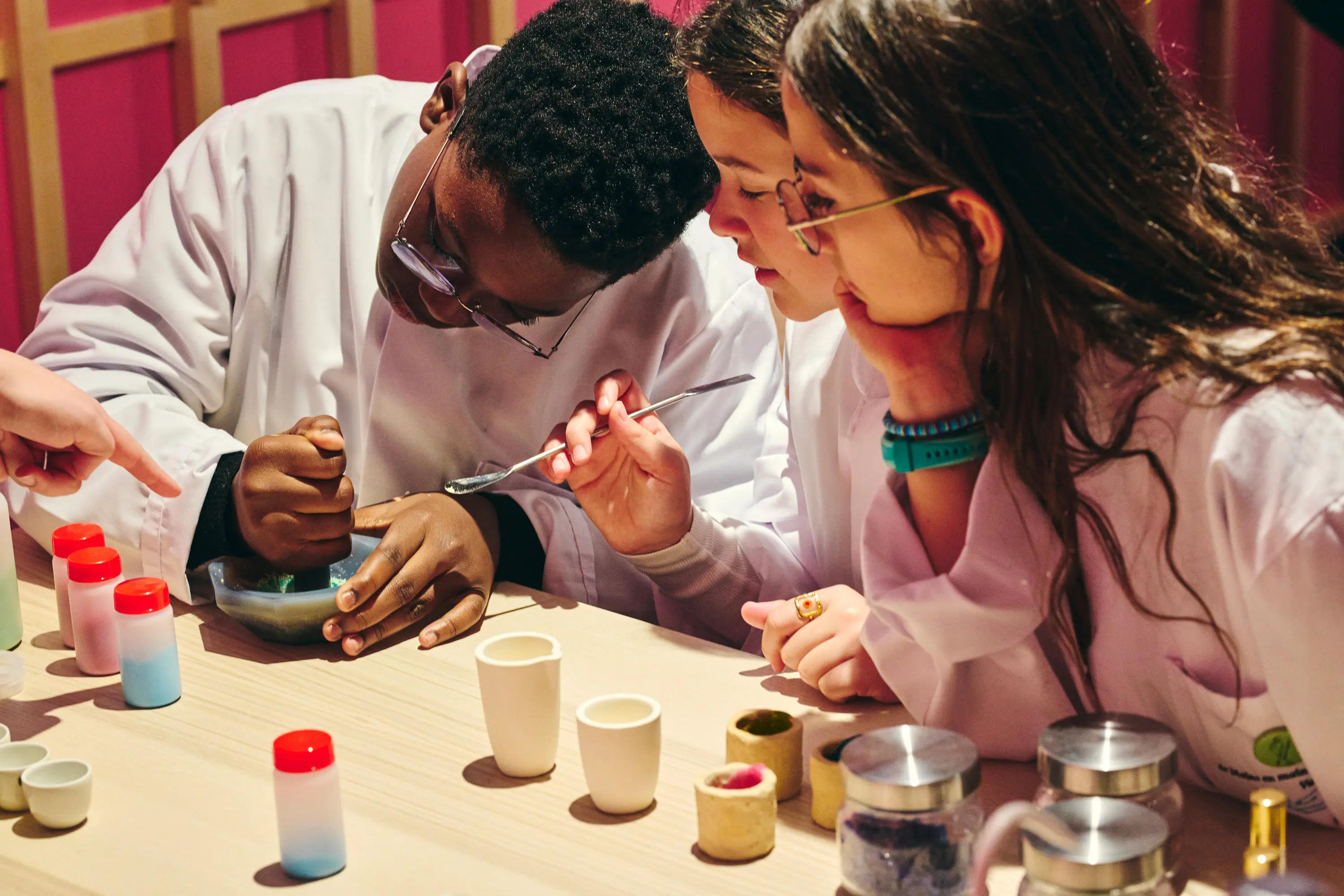
In November, the "Parcours des Savoir-faire" takes place at the InterContinental Lyon – Hôtel Dieu: a week-long event during which students between the ages of twelve and fifteen work directly with craftspeople from the Van Cleef & Arpels workshops and get to try their hand at six professional stations — as a goldsmith, gemstone expert, stone setter, 3D designer, polisher, and enameller.

© PR
Hands-on tasks: the basics of goldsmithing
Catherine Renier, President and CEO of Van Cleef & Arpels, places the initiative within the Maison's long-term strategy: since 2021, "de Mains en mains" has been a recurring annual event at which all teams have the opportunity to share their passion for the jewelry profession.
The expansion — first to Lyon, and then in February 2025 to Clermont-Ferrand for the first time — was made possible only through the support of the French Ministry of Education and the backing of trusted partners. It reflects a growing collective awareness of how essential in-house savoir-faire is to future creations.
That the programme is about more than just recruiting young talent is clear from the voices of those who have taken part in it. One seventh-grader who participated in the Parcours in 2022 said that polishing had been his favourite part — it had felt approachable, and he had been proud to be the first in his group to finish. Afterwards, he drew up a list of career wishes that included journalist and archaeologist — and jeweller.
Mathéo, a stone setter in the Lyon workshops, also speaks to the impact of the workshops: for the duration of a session, you transform young people into stone setters, goldsmiths, polishers, and designers, allowing them to discover each stage of jewelry making — and it is wonderful to see how much they enjoy the experience and say so.

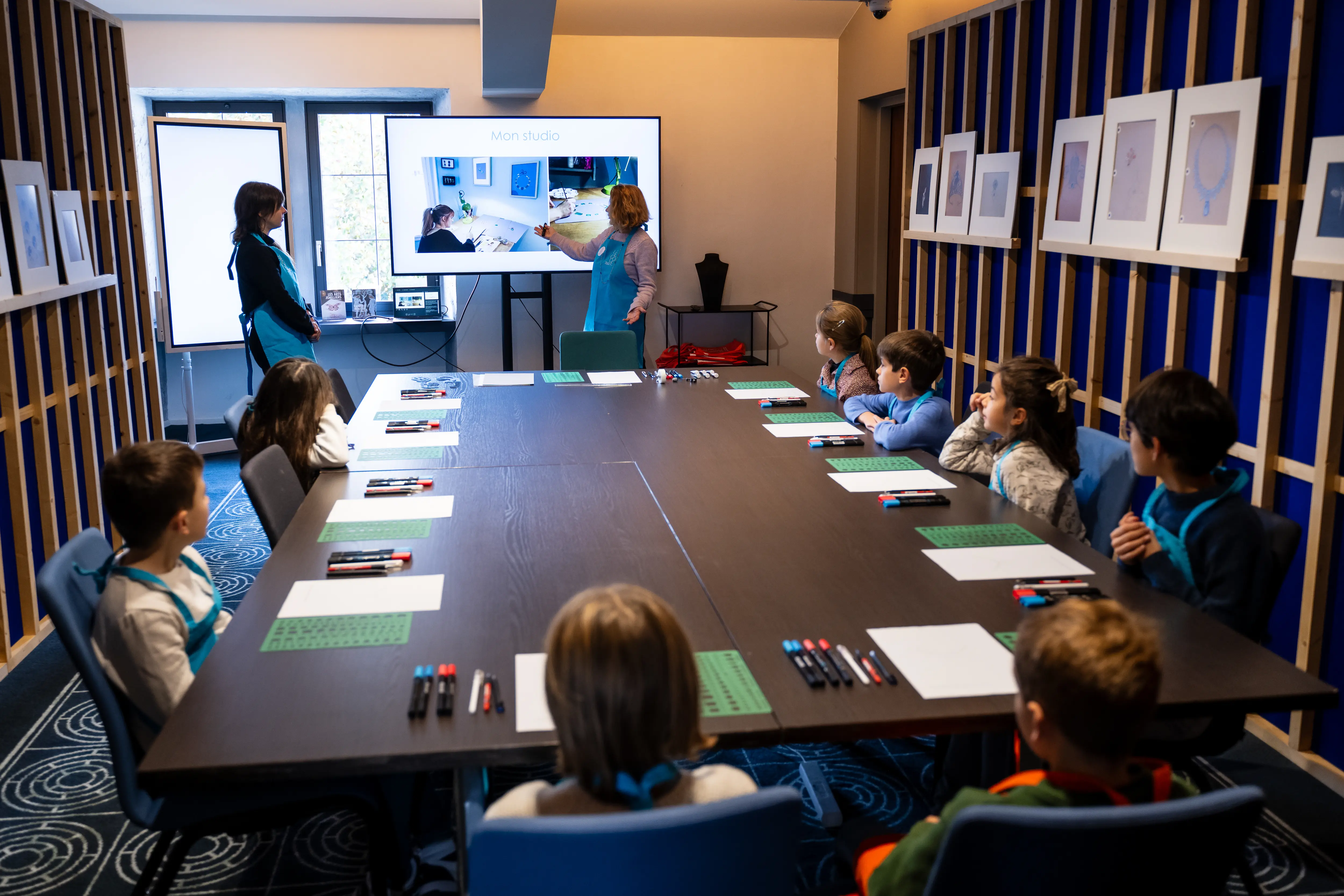
© Dylan Dubois
Theory lessons are also on the programme
That a single encounter can truly set someone on a career path is illustrated by the story of Pauline, now a goldsmith in the Lyon workshops: she first discovered Van Cleef & Arpels in 2022 at a "de Mains en mains" event in Lyon, which she attended with her school, SEPR.
The values, the expertise, and the pieces on display had ignited a desire to join the Maison — a desire that was ultimately fulfilled through the company's own "Pépinière," a training programme lasting between four and twelve months.
What was originally conceived as a purely youth programme has since expanded into a multi-day public event. Alongside the "Parcours des Savoir-faire" for school classes, Van Cleef & Arpels also opens its doors to the general public at the end of the day and on weekends, subject to reservation.
Visitors can watch craftspeople from the Maison work together to create a "Coccinelles" brooch — a piece that brings together gemmology, goldsmithing, stone setting, polishing, and enamelling.
Van Cleef & Arpels is not alone in this approach. Other luxury houses are also investing more and more in programmes that introduce young people to traditional craft professions at an early age — whether through workshops aimed at younger audiences or event series that travel across multiple cities.
The background is consistent across the industry: anyone who wants to preserve highly specialized, often decades-old manufacturing traditions must actively make them accessible to young people. Many young people today no longer find their way into professions that demand patience, precision, and manual dexterity on their own.
Whether the encounters in Lyon will ultimately lead to real careers in Haute Joaillerie is hard to predict in any individual case — but Pauline's path shows that it can happen. The very fact that a company like Van Cleef & Arpels brings such visibility to its craft professions sends a signal that extends well beyond its own talent recruitment: handcraft and precision still hold their value — and their place — even in the digital age.
Those interested in the interplay of craftsmanship and design history need not travel to Lyon. Since 10 June 2026, the MAK – Museum of Applied Arts in Vienna has been presenting the exhibition "GLANZSTÜCKE. Van Cleef & Arpels High Jewelry × Masterpieces from the MAK Collection" (until 27 September 2026).
The exhibition brings together around 500 exhibits: approximately 350 Haute Joaillerie pieces from the company's own collection — established in the 1970s by Jacques Arpels and comprising more than 3,000 objects — alongside around 160 works from the MAK collection, ranging from medieval textiles to designs from the Wiener Werkstätte.

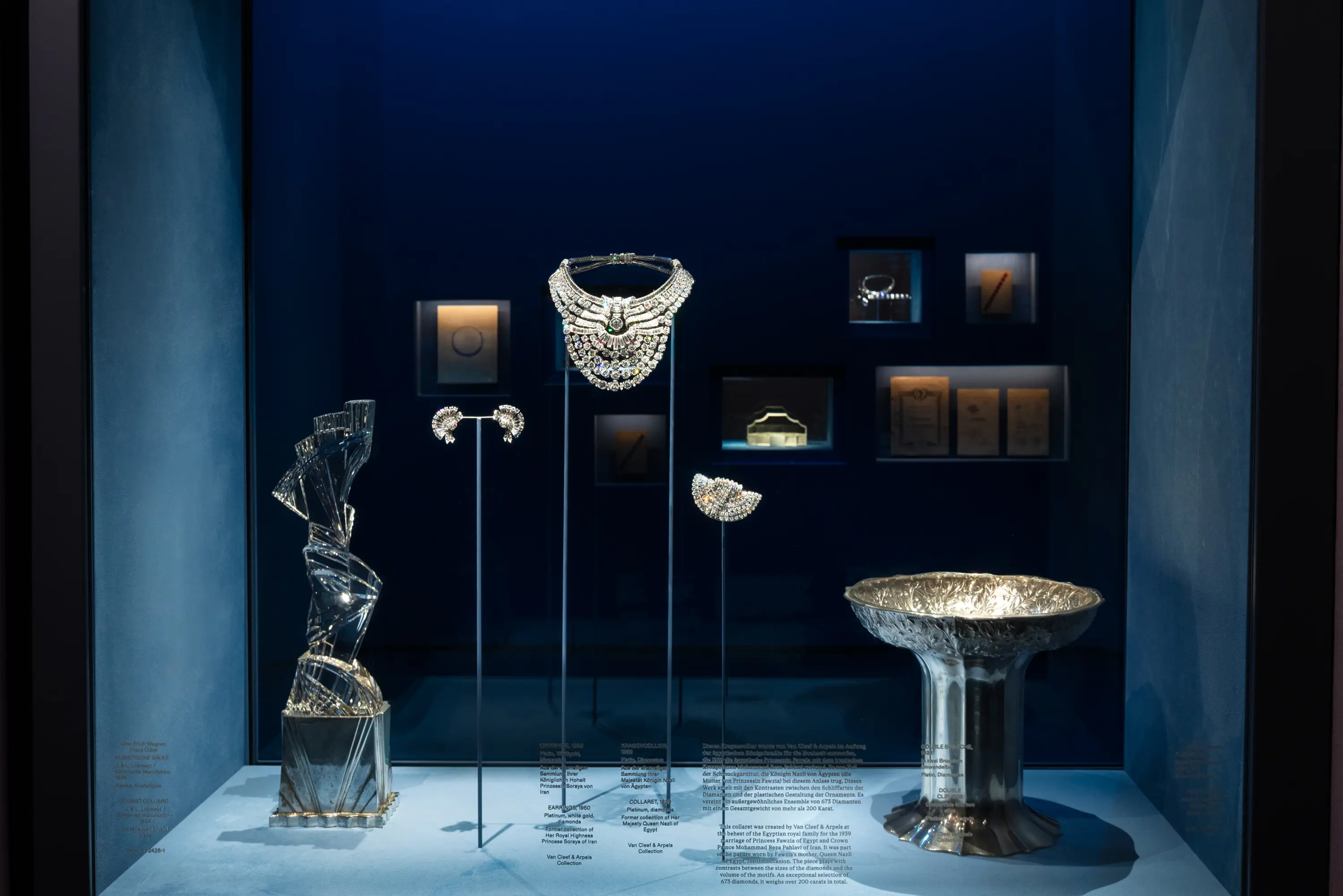
© Ivan_Erofeev
Spectacular: the exhibition GLANZSTÜCKE. Van Cleef & Arpels High Jewelry × Masterpieces from the MAK Collection
The labyrinthine scenography, designed by Atelier Tsuyoshi Tane Architects, guides visitors through six thematic chapters: Wanderlust (including an 1906 model of the sailing yacht "Varuna" in dialogue with a historic knotted carpet from the Austrian imperial household), Architecture (featuring the Minaudière patented in 1933 and a neoclassical gaming table by David Roentgen), Rhythmic Designs (Art Deco brooches juxtaposed with archival material from the Wiener Werkstätte), On Stage (ranging from courtly ball culture to the fairy and dancer motifs of the Maison), Metamorphoses (featuring the transformable "Zip" necklace from 1938 and a screen by Koloman Moser), and Nature & Cosmos, which showcases the celebrated "Mystery Set" setting technique alongside the "Chrysanthemum" brooch.
The exhibition is curated by Alexandrine Maviel-Sonet (Director of Heritage and Exhibitions at Van Cleef & Arpels) and Anne-Katrin Rossberg (Curator of the MAK Metal Collection and the Wiener Werkstätte Archive).