© Datu Wellness
August 11, 2026
Christine Bürg & Marianne Waldenfels
A personal crisis brought Constantin Bjerke to India — and ultimately led him to found Datu Wellness. In this interview, he talks about Ayurveda, the art of letting go, and why we so often turn even our recovery into yet another self-optimization project.
Perform, produce, optimize — and yet even on vacation, many people struggle to truly switch off. Constantin Bjerke knows this feeling firsthand. After 20 years in the media industry and several personal setbacks, he traveled to India in 2021 and immersed himself inAyurveda and yoga. The experience not only transformed his own understanding of health and well-being, but ultimately led to the founding ofDatu Wellness.
Today, Bjerke brings experienced Ayurvedic doctors, yogis, and therapists from Asia to Europe for retreats. In this interview, he talks about why the way out of a crisis sometimes leads inward, why at Datu "everything is possible, nothing is mandatory," and why we need to stop turning even our recovery into the next optimization project.
Datu Wellness grew out of a personal crisis. How did that period in your life lead you to Ayurveda?
After 20 years in film, television, advertising, and media, when the pandemic hit, I found myself in a situation many others will recognize: a lot had gone wrong. My marriage fell apart, my dog died, my father had passed away suddenly a few years earlier. Then I tore my meniscus, and the entire production business ground to a halt.
And there I sat — lonely and alone — in a dark hole in my apartment, not knowing which way to turn. Then a friend told me that Ayurveda was the answer to everything, the path out of all suffering. Out of desperation, I booked a one-way ticket to India in the summer of 2021. I had never been there before. The country was closed, but I had a medical visa that allowed me to enter.
There I encountered truly remarkable healing methods, gentle psychology, and remarkably effective treatments that moved me deeply and helped me enormously. When I returned to Europe, I realized that the people around me were all going through something similar. The older you get, the longer you live, the more life happens — and a great deal of what happens falls into the category of what we would call unpleasant. People get sick, people die. Relationships fall apart, you lose your job, or you fall out with someone.
Then we start to compensate — to numb ourselves and distract ourselves. We usually do this through excessive consumption: alcohol, food, relationships, shopping, endless TV, or scrolling on our phones. In any case, we do everything we can to avoid confronting the root causes of it all.
What I learned is that the way out of this misery is the way inward. I wanted to share that with others — and "Datu" means "to share" in Sanskrit.
© Datu Wellness
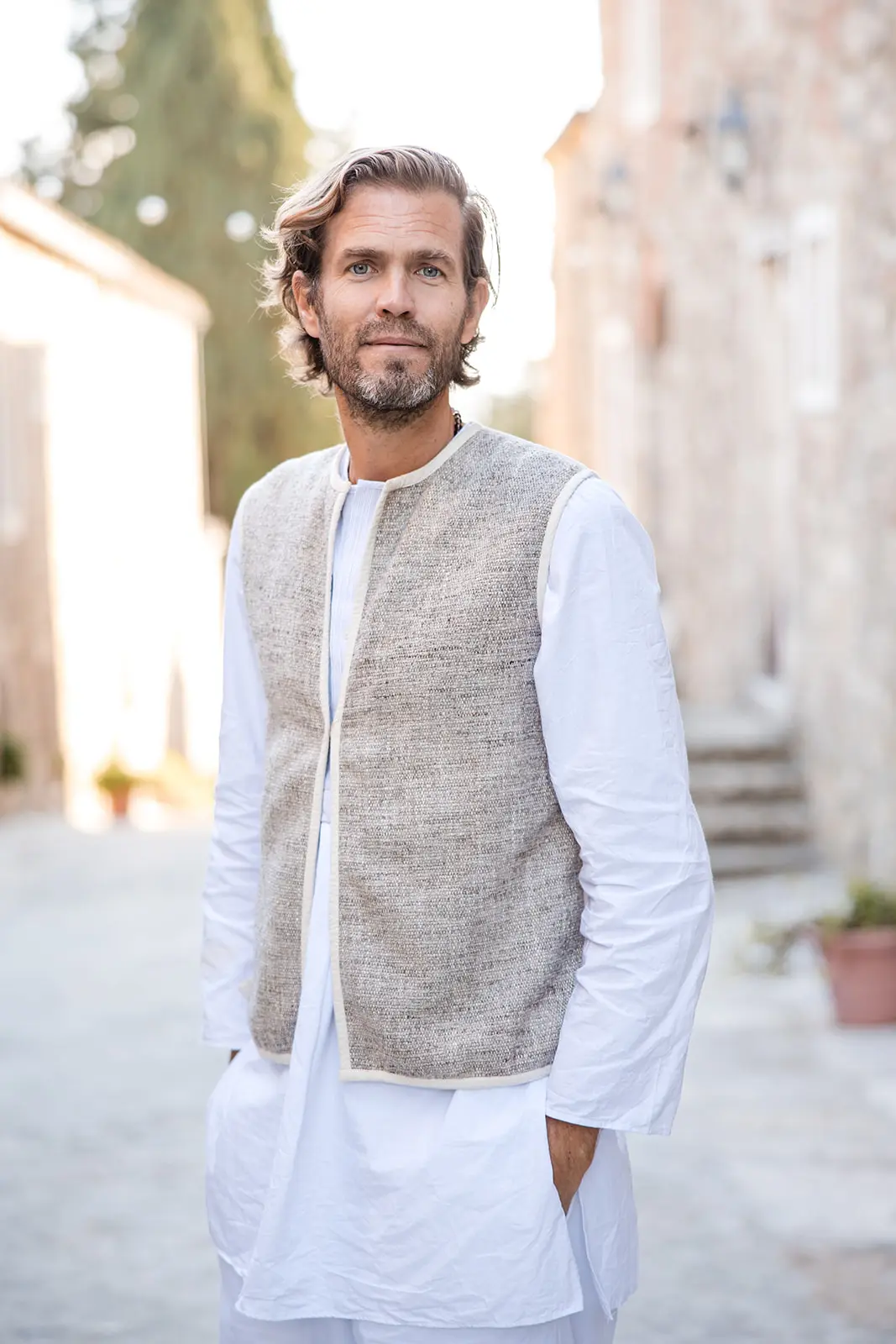
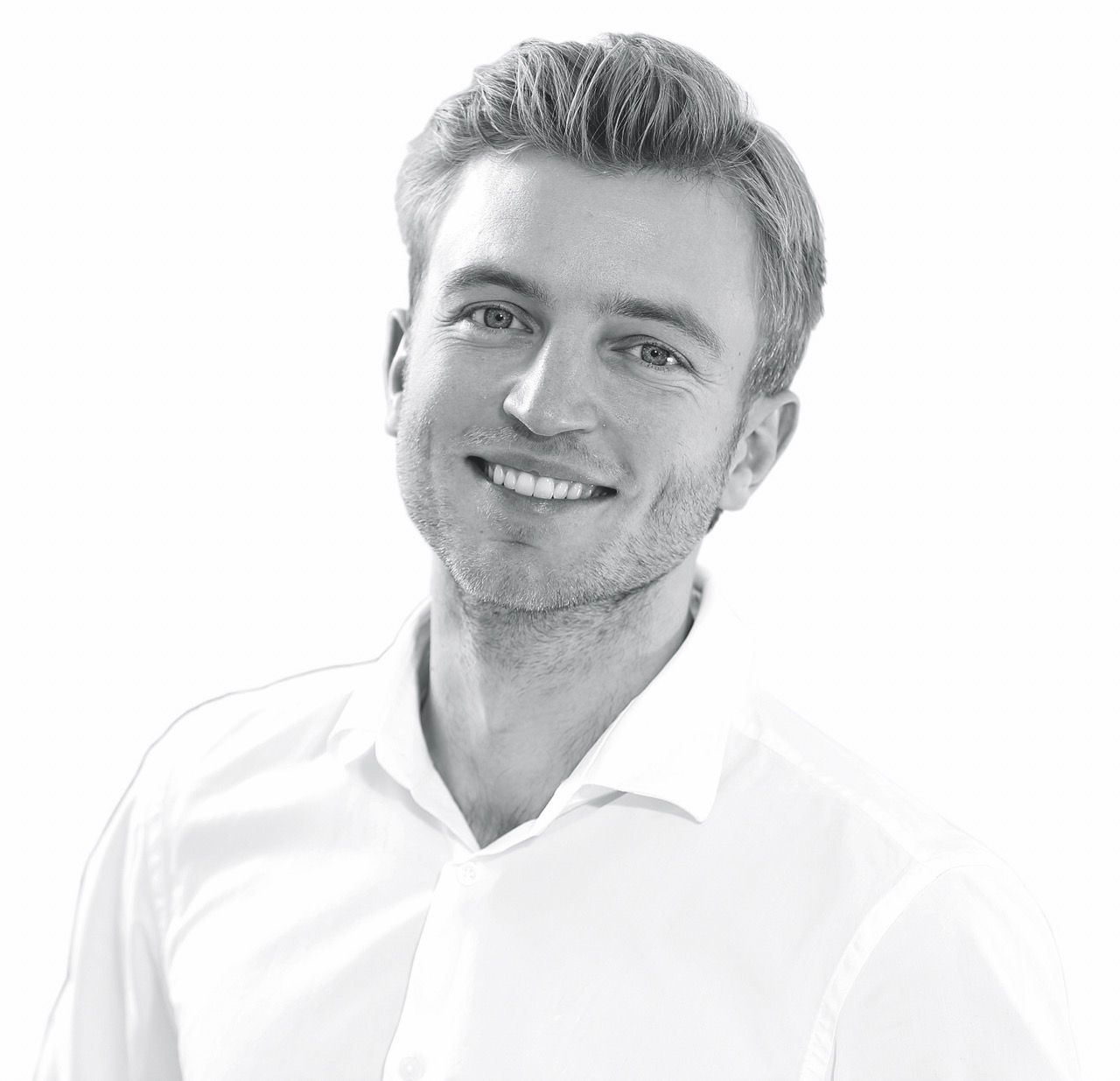
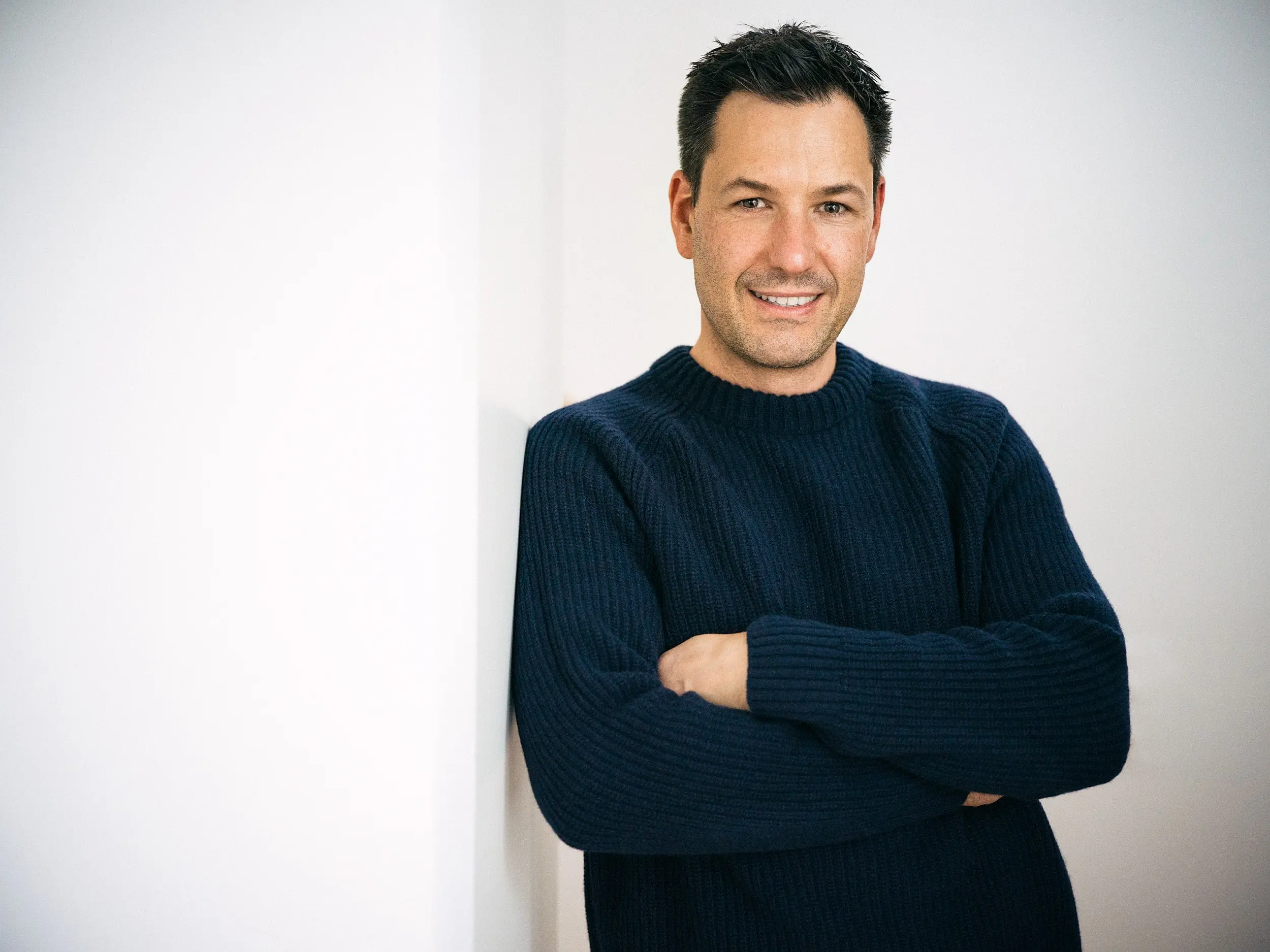
Datu Wellness founder Constantin Bjerke
There are now countless retreats focused on yoga, mental health, or detox. What sets Datu Wellness apart from other concepts?
Our guests tell us it's something very special. We ourselves believe we are simply sharing knowledge and experience that has existed for 5,000 years and that has personally benefited us.
The most important difference is, first and foremost, the team. Because people help people — people heal people. Around 20 to 25 wonderful, highly experienced experts come to us in Europe, some from families in which healers and Ayurvedic doctors have practiced for many generations. These include specialists from India in the fields of Ayurveda, yoga, and Traditional Chinese Medicine.
The second key point is our holistic approach. We don't focus on just one thing. In keeping with this ancient wisdom, we believe it's about body, mind, and soul — the whole person. That's why our offerings range from treatments, massages, and acupuncture to conversations and creative expression, as well as the many dimensions of yoga. Yoga is, after all, so much more than gymnastics or sport — it is a philosophy of life thousands of years old.
The third point is gentleness. Our motto is: everything is possible, nothing is mandatory. We believe everyone is their own best healer. We can offer tips, suggestions, and treatments, but the body knows what it needs.
What expectations and needs do people typically bring to your retreats?
What they all have in common is a desire to do something good for themselves — to take a break, to take care of themselves, and to give themselves the gift of stepping away from everything else for once and truly focusing only on themselves.
We live embedded in relationships and responsibilities. Simply saying "I'm going to take care of myself for a week" is something many people find surprisingly difficult.
Then of course people arrive with specific concerns — whether health-related issues or deeper questions about how they want to live: Do I still want to keep doing this job? Is this relationship still good for me? I think what unites everyone is a desire to move forward.
Many people find it hard to truly switch off, even on vacation. How is it possible to find genuine calm within the space of a single week?
There are, of course, techniques and methods for this. If I go on holiday but have my three children with me and still have to think about what to cook tomorrow, I'm still stressed.
Just as every athlete knows from warm-ups and recovery routines, there are methods to help the body wind down. When guests arrive with us, the very first thing we do is make sure they feel, metaphorically speaking, wrapped in a warm embrace. The goal is that they can exhale, breathe deeply, let go, and settle in. Every guest genuinely feels arrived and at ease after the very first night.
And how do you prevent that sense of restoration from quickly fading once people return to everyday life?
One aspect of Western culture is that we compete with ourselves. We tell ourselves: I have to go to the yoga studio five times a week. I have to lose two kilos this week. I must, I must, I must. And because we can't always achieve everything, we end up feeling bad about ourselves.
That's why, during the week, we introduce guests to a wide range of methods and small, practical suggestions — and then ask: which of these felt particularly good? Which ones really helped? Then we say: just pick one of those things and focus on it for the next month.
We extend the time horizon from days to weeks. Not: I want to meditate every day. But: I want to meditate twice a week. That way the goal is achievable and realistic, which creates a sense of success rather than failure. That gentleness brings joy to the process, and from there you can build gradually. Everything doesn't have to have changed by next month.
What does a typical week at Datu Wellness look like?
Everything begins with a consultation with our Vaidyas — Ayurvedic doctors who use pulse diagnosis, eye and tongue diagnosis, and conversation to first get a sense of what is really going on. This initial assessment is the starting point for everything that follows.
After that, there are essentially two distinct programs. The first is a personalized, individual program comprising treatments, acupuncture, and Ayurvedic massages. We draw on around 50 different therapies fromTraditional Chinese Medicine, Ayurveda, and the Tibetan tradition, as well as Western approaches such as deep tissue massage.
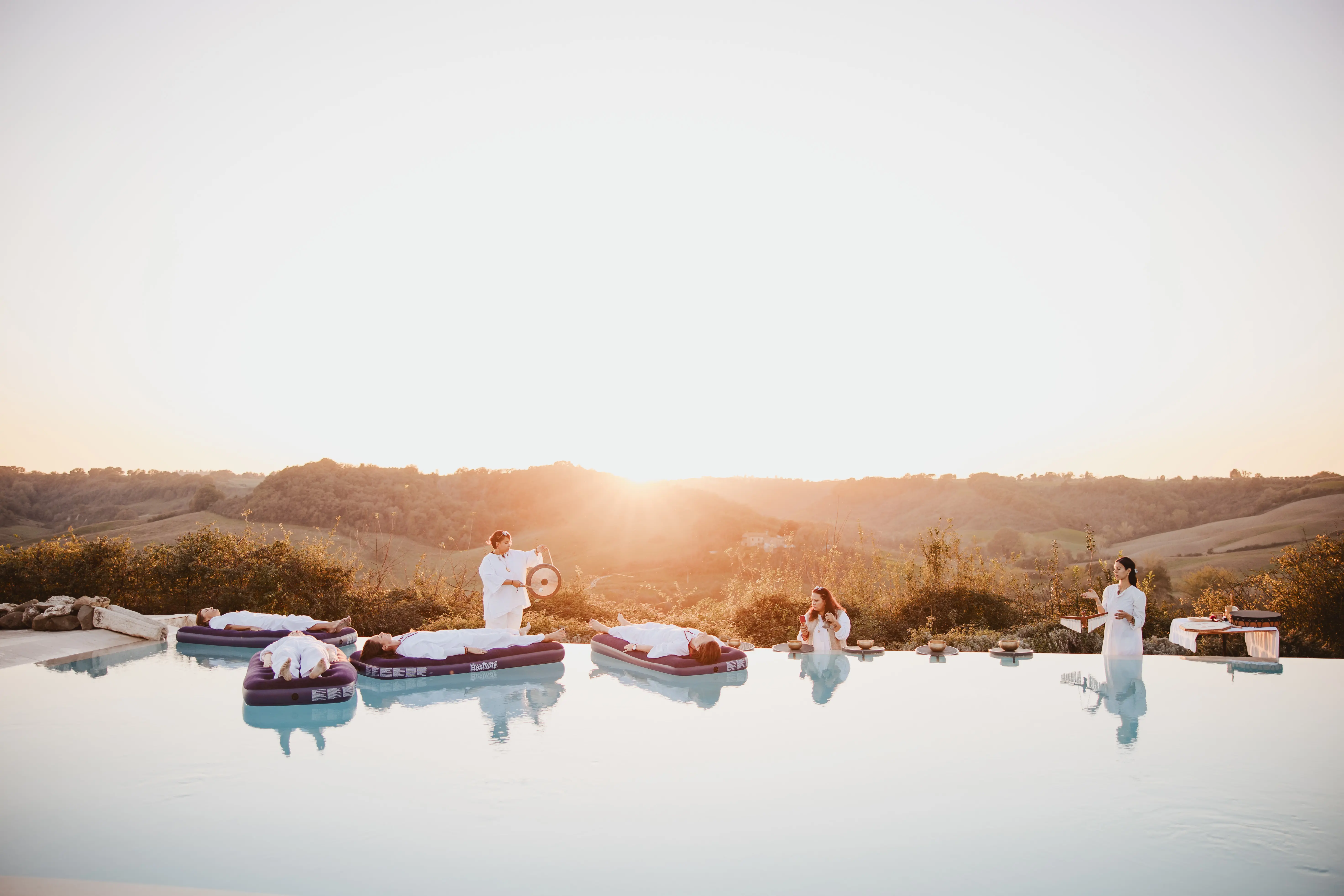
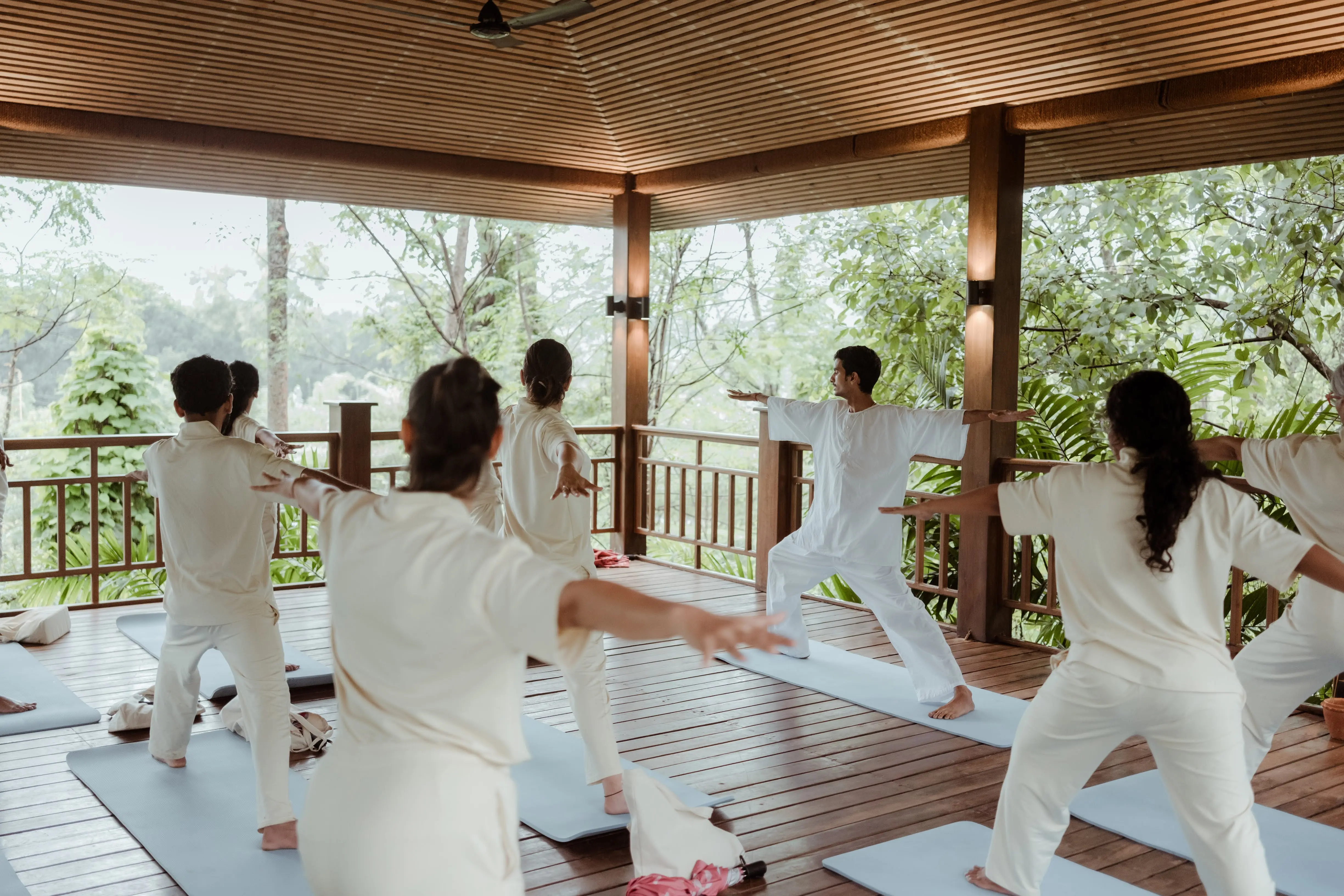
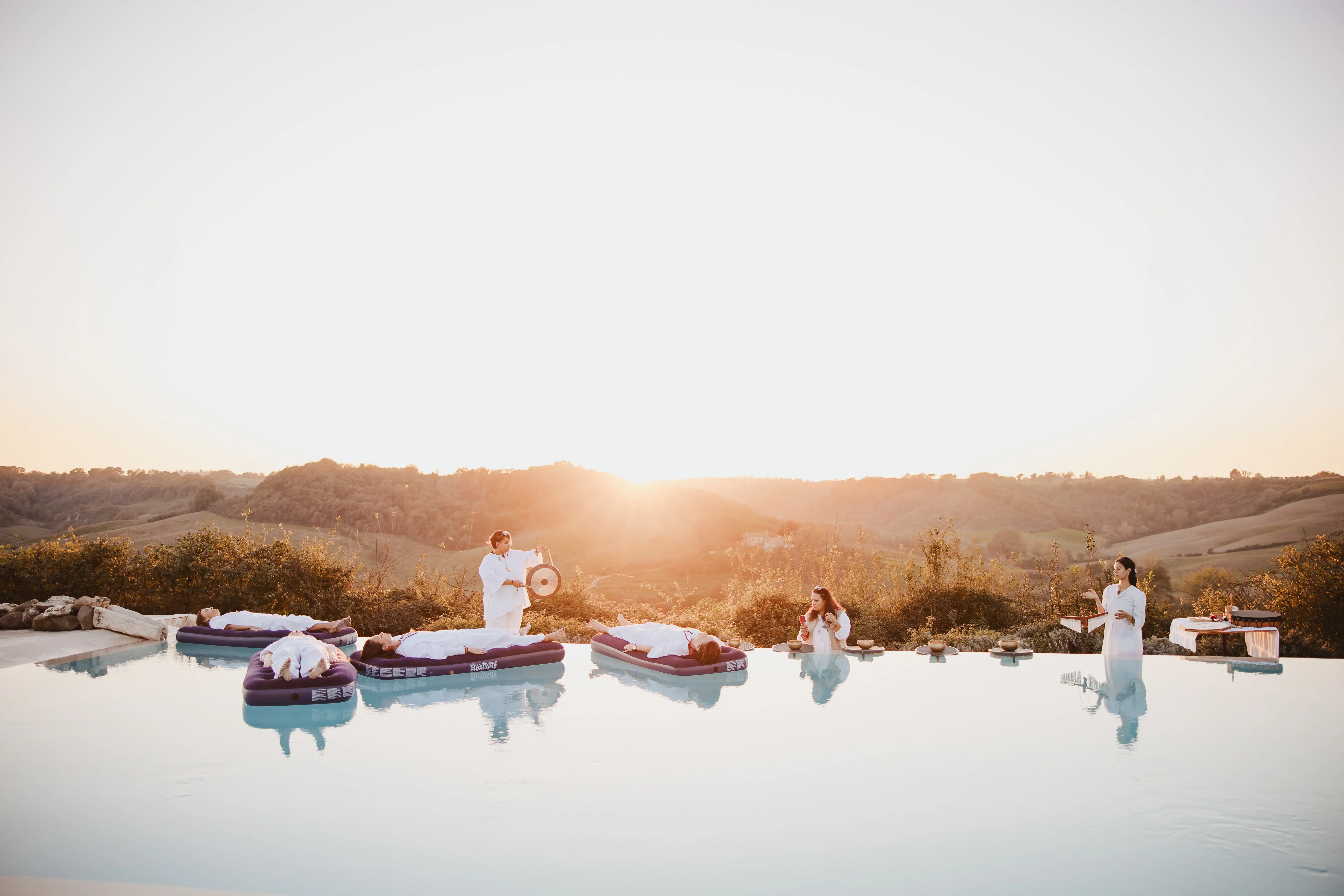
Alongside this runs a group program that stretches from sunrise through after dinner. It includes creative expression, dance, cooking classes, talks, and a variety of yoga classes covering movement, breathwork, meditation, and Yoga Nidra.
How is it decided which treatments are right for a particular guest?
We as a team make recommendations at the outset. If someone has a slow metabolism and perhaps needs a bit more energy, we might suggest, for example, that getting up early and moving the body could be genuinely beneficial.
If someone arrives in a state of complete burnout, we might recommend Yoga Nidra and sound therapy to help bring them down a little. So there is guidance, but the principle always holds: everything is possible, nothing is mandatory. Everyone is free to do as much or as little as they wish.
One distinctive feature stands out immediately: at Datu, guests wear white clothing. What is the thinking behind that?
We try to remove as many decisions as possible from our guests. It starts with packing: if you don't have to think about what to bring because everything is provided on-site, that's already a significant relief.
At the same time, we instinctively judge other people based on how we perceive them. Those judgments are neutralized when everyone looks the same. There's no: where did she get those shoes? Why is he wearing that to dinner? And you don't have to worry: do I fit in? Am I overdressed or underdressed?
The third point is that dark colors absorb energy while light colors reflect it. In a space where so many personal energies and experiences are present, we want to protect our own energy. White clothing is, for us, a good way of doing that.
One of your core principles is: "You are your own guru." What does that mean to you?
That is, of course, not my principle — it is an Ayurvedic principle thousands of years old. At its heart, it simply means that all healing, all improvement, and all change in life and in the body can only come from within yourself.
We as a team, we as a retreat, are here to pass on our experiences, our methods, and our practices. They are not ours — we received them ourselves, and now we pass them on.
In the West, we often hope that we could take a pill and it would solve our problems. That's simply not how it works. I have to do the work myself. Someone can support me, offer guidance, help me, share their wisdom with me — but I have to do the work myself.
Datu Wellness is a nomadic retreat concept based in Italy with rotating seasonal residences, occasionally in other countries as well. Current locations and dates can be found atwww.datuwellness.com

© Datu Wellness
The group program runs from sunrise through after dinner

Robotic assistance promises greater precision in knee replacement surgery – and potentially a faster recovery. But do patients really get back on their feet sooner? Orthopedic surgeon PD Dr. Daniel P. Berthold explains what the evidence shows.
Christine Bürg & Marianne Waldenfels

An interview with
PD Dr. med. Daniel P. Berthold