© Planet Volumes/Unsplash
March 16, 2026
PMC Redaktion
How can colorectal cancer be better prevented, detected earlier, and treated more effectively? Experts will discuss new strategies on March 26, 2026, in Munich

With
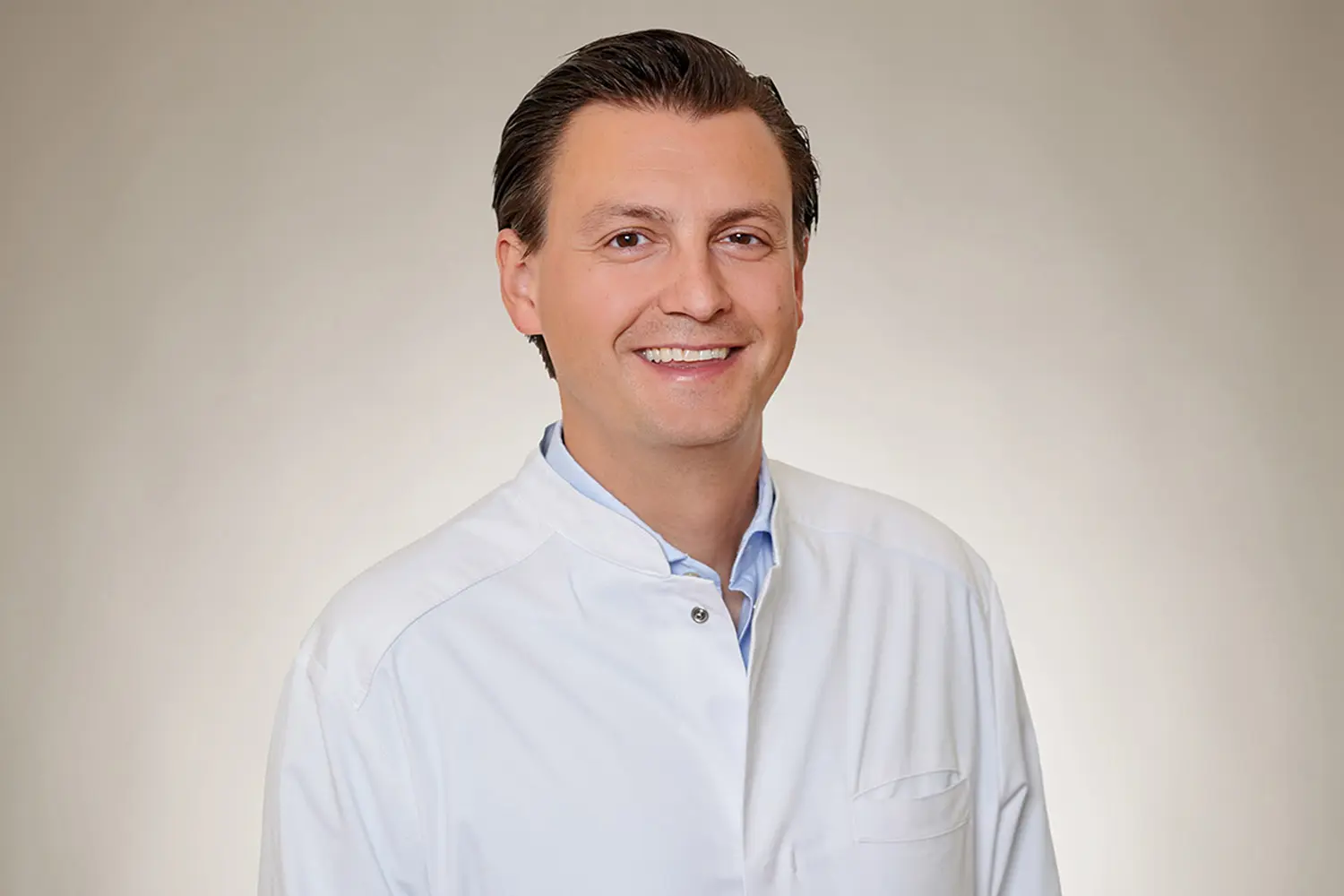
Prof. Dr. med. Franz Bader
Colorectal cancer is now considered one of the types of cancer that can often be prevented or at least detected early through consistent screening. Nevertheless, more than 55,000 people in Germany are newly diagnosed each year. According to experts, this shows that prevention, early detection, and care need to be more closely integrated.
New developments in diagnostics and therapy open up opportunities that were hardly imaginable a few years ago. Especially for risk groups, early diagnostics, molecular procedures, and personalized treatment approaches can be crucial. At the same time, experts see a great need for action: prevention strategies must be better integrated, innovative procedures must be adopted into care more quickly, and screening must be further developed in a more patient-oriented manner overall.
Against this backdrop, experts will discuss new approaches in prevention, diagnostics, and treatment under the title "Rethinking Colorectal Cancer Prevention – National Strategies, Molecular Diagnostics, Personalized Therapy" on March 26, 2026 at the Isarklinikum Munich.
The program of the Colorectal Cancer Symposium includes topics such as prevention genetics, liquid biopsy, personalized oncology, and robot-assisted minimally invasive surgery and their significance for the future care of patients with colorectal cancer.
"The aim is to classify current developments and set impulses for a modern, structured, and quality-assured provision," says Prof. Dr. med. Franz Bader, Medical Director of the Isarklinikum.
The symposium is also supported by politics: Bavaria's Minister of Health, Judith Gerlach, has taken over the patronage. Her commitment underscores the health policy importance of a stronger prevention strategy and quality-assured care.
In the run-up to the symposium, Prof. Dr. med. Franz Bader answers the most important questions about prevention, early detection, and therapy for colon cancer.
Colon cancer is one of the few cancers that can actually be prevented in many cases. Yet, not enough people still take advantage of existing preventive measures such as colonoscopy and iFOBT. Therefore, prevention must be thought of earlier, more personalized, and digitally supported in the future.
This includes risk-adapted screening programs, better involvement of general practitioners and gastroenterologists, as well as new digital invitation and reminder strategies. At the same time, it must be more strongly conveyed that prevention does not start with colonoscopy but already with lifestyle, diet, and exercise. Prevention is thus a societal task that medicine, politics, and education must jointly bear.
In prevention, there is currently rapid development in molecular biomarkers and modern stool tests, which are becoming increasingly sensitive and could enable even more individualized early detection in the future. So-called liquid biopsy procedures could also play a role in the future.
Therapeutically, colon cancer has developed into a disease where precision medicine concepts are gaining increasing importance: molecular tumor characterization, targeted therapies, and immunotherapies are central keywords here.
In parallel, artificial intelligence in endoscopy and improved imaging open new possibilities to detect precursors and tumors earlier and more precisely. The interplay of all disciplines is crucial – from prevention to diagnostics to personalized therapy.
Surgery remains a central component of curative therapy for colon cancer. At the same time, it is becoming more precise and minimally invasive. Robotic procedures, improved imaging, and standardized oncological surgical techniques allow for gentler treatment today while maintaining high oncological safety.
In the future, surgery will be even more embedded in multimodal therapy concepts, for example, after neoadjuvant therapies or as part of organ-preserving strategies for selected patients. The goal is always to achieve the best possible combination of oncological radicality, functional preservation, and quality of life.
The most important step is to participate in screening, particularly colonoscopy. This not only enables early detection but also the removal of precursors before cancer develops. Additionally, a healthy lifestyle plays an important role: regular exercise, a high-fiber diet, as little red and processed meat as possible, and moderate alcohol consumption can reduce the risk.
Maintaining a normal weight and refraining from smoking also contribute to risk reduction. Prevention ultimately means taking responsibility for one's own health and consistently utilizing available medical options.
Info:
Colon Cancer Symposium ISAR Klinikum on 26. 3. 2026
Time: 5pm - 7pm
Venue: ISAR MED Forum, Sonnenstraße 24–26, 80331 Munich
Registration: Participation is free of charge. Registration is requested via email to: marketing@isarklinikum.de