© Freepik
December 5, 2025
Marie Hein
Anyone who trains today doesn't really have to think for themselves anymore. Apps count repetitions, trackers correct posture, algorithms recognize our energy level, and training plans update automatically. The result: personalized, efficient workouts that save one thing above all: time. How does it work? We explain here and introduce six AI trainers to test.
Sure, automated training is not an invention of the present. Pedometers, heart rate straps, or calorie counters have long existed, even before artificial intelligence was on everyone's lips.
In principle, AIs build on exactly this, but they are much smarter: They not only analyze our data, but also learn from it, recognize patterns, create training plans, and constantly adapt them. They work almost (!) like personal trainers. In practice, this means: When you go running, the AI recognizes from your heart rate and pace whether you're overexerting yourself and automatically recommends a more relaxed session.
In strength training, it recognizes when an exercise was too difficult for us and adjusts the weights or repetitions accordingly. Those who train at home even receive real-time feedback from some systems with cameras, for instance, if the knees cave in during a squat or the back sags during a plank.
AI can only react as well as the data we provide it. The more accurate, consistent – and honest – the information about age, goals, performance level, or complaints, the more precise the recommendations will be. The basis for this is machine-learning models that recognize patterns from millions of movement datasets and assess load or progress. Some applications use computer vision, analyze movements live, and help improve posture – namely planks – or the timing of an exercise. Other systems evaluate training history, heart rate patterns, or fatigue values and automatically create new plans from them.
There are many ways to incorporate AI into your own training. Which one you choose ultimately depends on your personal preferences, budget, and the question of how much technology you really want to use in everyday life. The most common at the moment are fitness apps, smart wearables, or universal AIs.
Apps operate on a simple principle: You train, while the AI collects data, analyzes this information, and then adjusts the training plan directly to the current performance level. If you carry your smartphone with you, the AI also distinguishes between exercises like push-ups or squats and measures repetitions, movement directions, and acceleration.
Additionally, most apps score with a wide variety of training plans, workouts, and specializations, from yoga to HIIT. However, to obtain more accurate data, such as heart rate, the apps need to be linked to wearables.
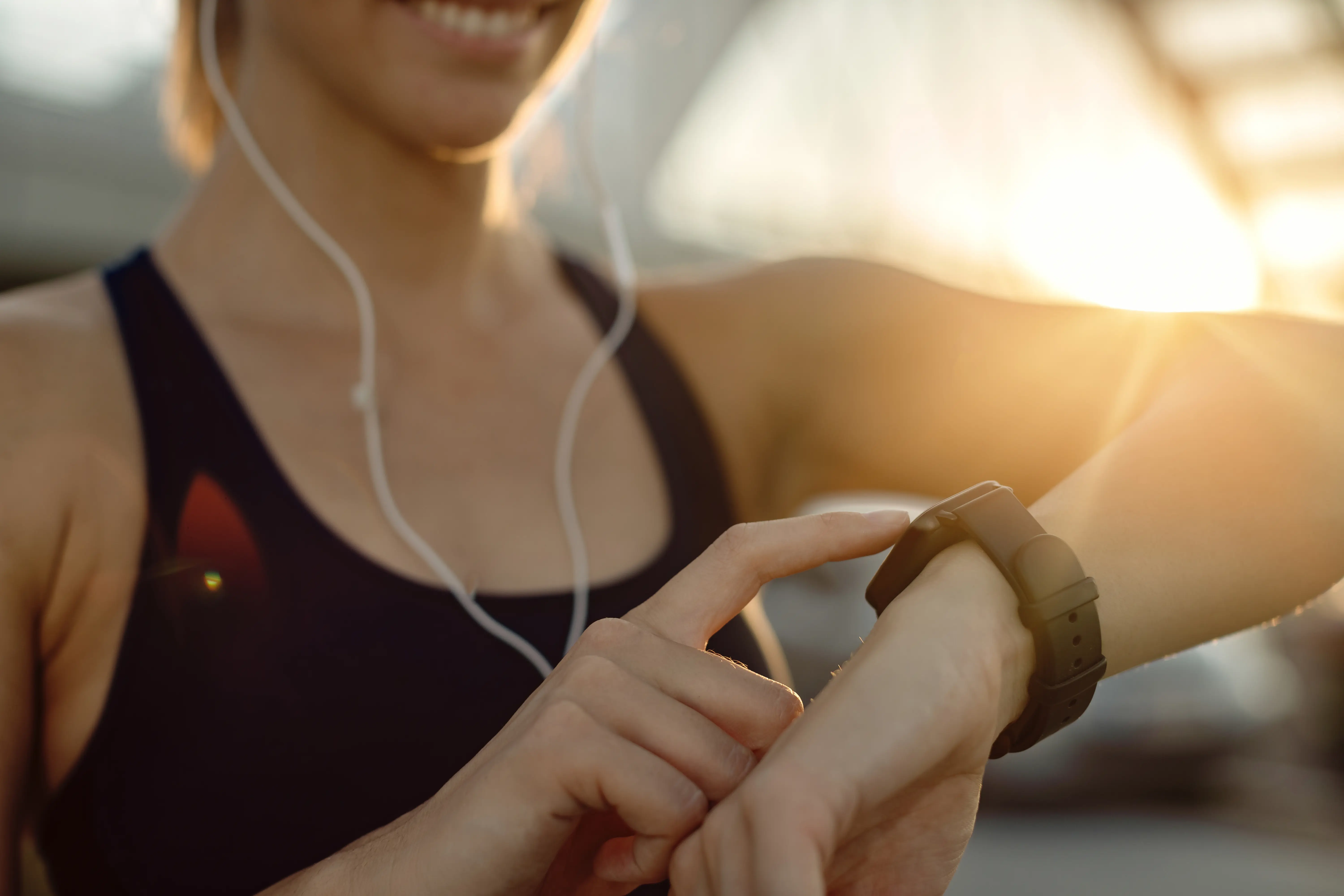
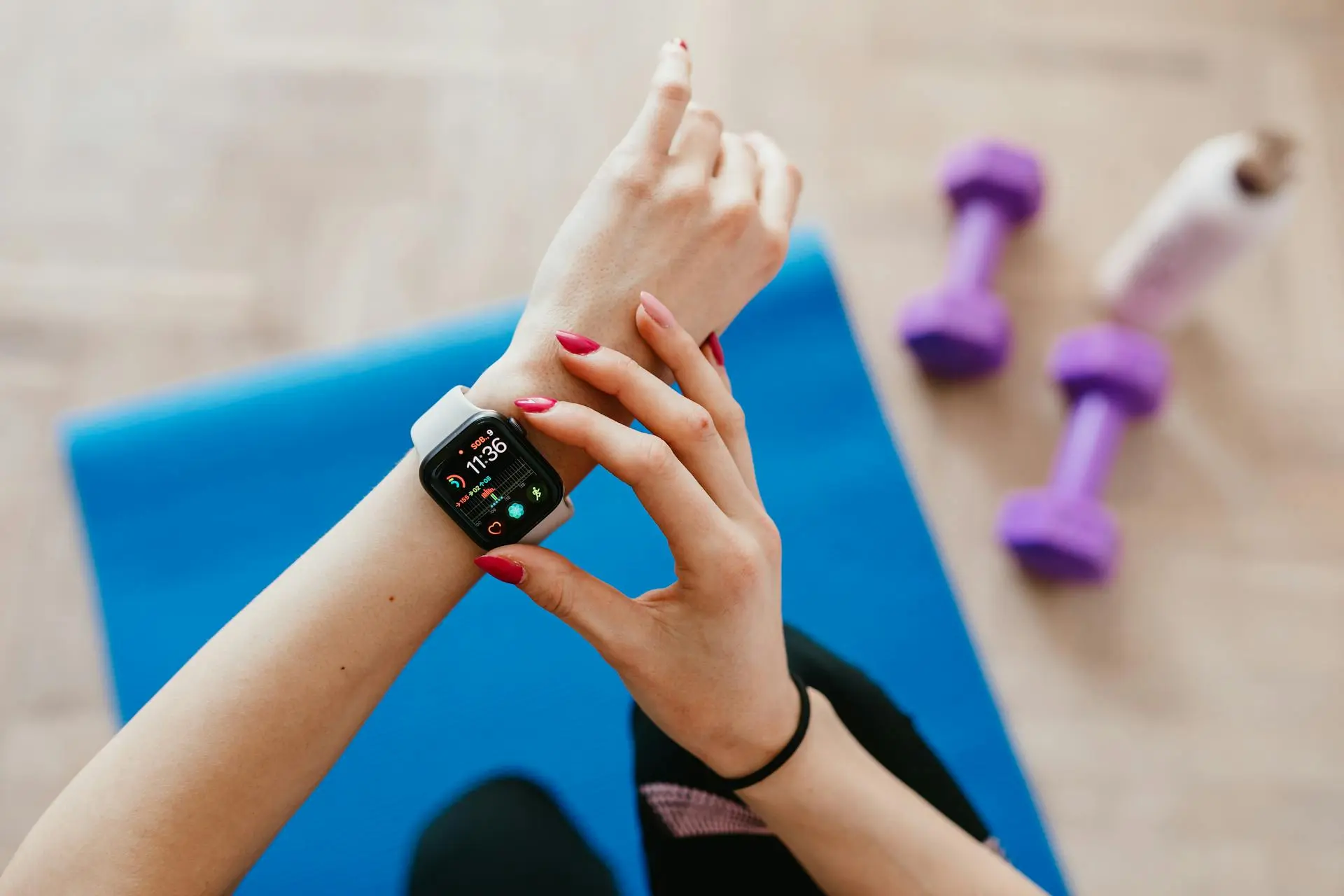
Wearables refer to small portable devices such as smartwatches or fitness bands that we constantly wear. They work in the opposite way and measure much more precisely: They automatically and continuously capture heart rate, movement, recovery phases, and sleep through built-in sensors.
From this data, the AI recognizes how stressed we are, how well we've slept, or when a break would be wise. Based on this, it calculates what training intensity is sensible today, which exercises fit, or whether a session should be skipped. But every wearable also needs an app where the training plans are displayed. The downside: You should wear the wearable as often as possible, ideally always, to gather as much data as possible.
More universal AIs respond flexibly in dialogue: They explain exercises, create training plans, or adjust existing sessions. The prerequisite is that you guide them very precisely. The more precise the prompt, the better the recommendation.
All of this sounds fantastic – and much of it is. AI can make training more efficient, more planable, and more convenient. But it doesn't replace a personal trainer: Empathy, situational sensitivity, and precise correction of a movement remain human. And anyone training with AI should keep one thing in mind: Our body awareness, knowing when enough is enough, when a break is needed, or when exertion is beneficial, cannot be replaced by AI. That remains our sole responsibility.
If you are looking for maximum flexibility, Freeletics is the right choice. The workouts last five to 30 minutes and work in the park, in the living room, or between appointments. The Freeletics Coach creates plans that continuously adapt to goals, progress, and fitness levels. No equipment is needed.
From 3.85 euros per week.
More information: Freeletics.com
Future combines AI analysis with real coaching: The app captures data and habits, analyzes them using algorithms, and provides them to coaches who develop weekly plans and provide personal feedback. Suitable for anyone who wants digital structure but doesn't want to miss out on human supervision. From $199 per year.
More info: Future.co.
Zing AI strongly relies on artificial intelligence: Through the 'Body Scan', the app analyzes body fat and muscle mass based on a photo. The derived training plans are tailored to goals, fitness level, and available equipment. With 'Zing Vision', the app uses the smartphone camera to evaluate movements in real-time. Ideal for those who like to manage their training in a very data-based way.
From $18.99 per month.
More info: Zing.Coach
Zepp Coach is the AI app suitable for Amazfit wearables and functions like a personal running coach on your wrist. The app creates individual plans for 5 km, 10 km, half marathon, or marathon and adjusts intensity and recovery daily based on the values measured by the wearable. From heart rate, load, and sleep, Zepp Coach derives recommendations for pace, volume, and recovery. Other workouts are supported, but the app's greatest strength clearly lies in running. The Zepp app is free. Wearables (watch) from Amazfit from 99.90 euros.
More info: Zepp.com and Amazfit.com.
WHOOP is less a fitness band and more a health band. It continuously measures strain and recovery, and with the help of the WHOOP Coach, it provides suggestions for training intensity and recovery, always considering sleep, stress level, and long-term well-being. Particularly interesting for women: WHOOP takes into account cycle and hormonal fluctuations and adjusts strain and recovery phases accordingly. Starting from 199 euros per year, including the band.
More info: Whoop.com
ChatGPT explains exercises, structures training plans, adjusts sessions to time, level, or complaints, and answers questions about technique, recovery, or motivation. However, only if you actively ask for it. You must guide the AI specifically. Properly prompted, ChatGPT offers quick orientation, new training ideas, and is especially suitable for those who want to try AI-based training in a straightforward way.
Free, more info: Chatgpt.com