© PMC
- Hamburg und Norddeutschland
- Orthopedics & Musculoskeletal Longevity (MSK)
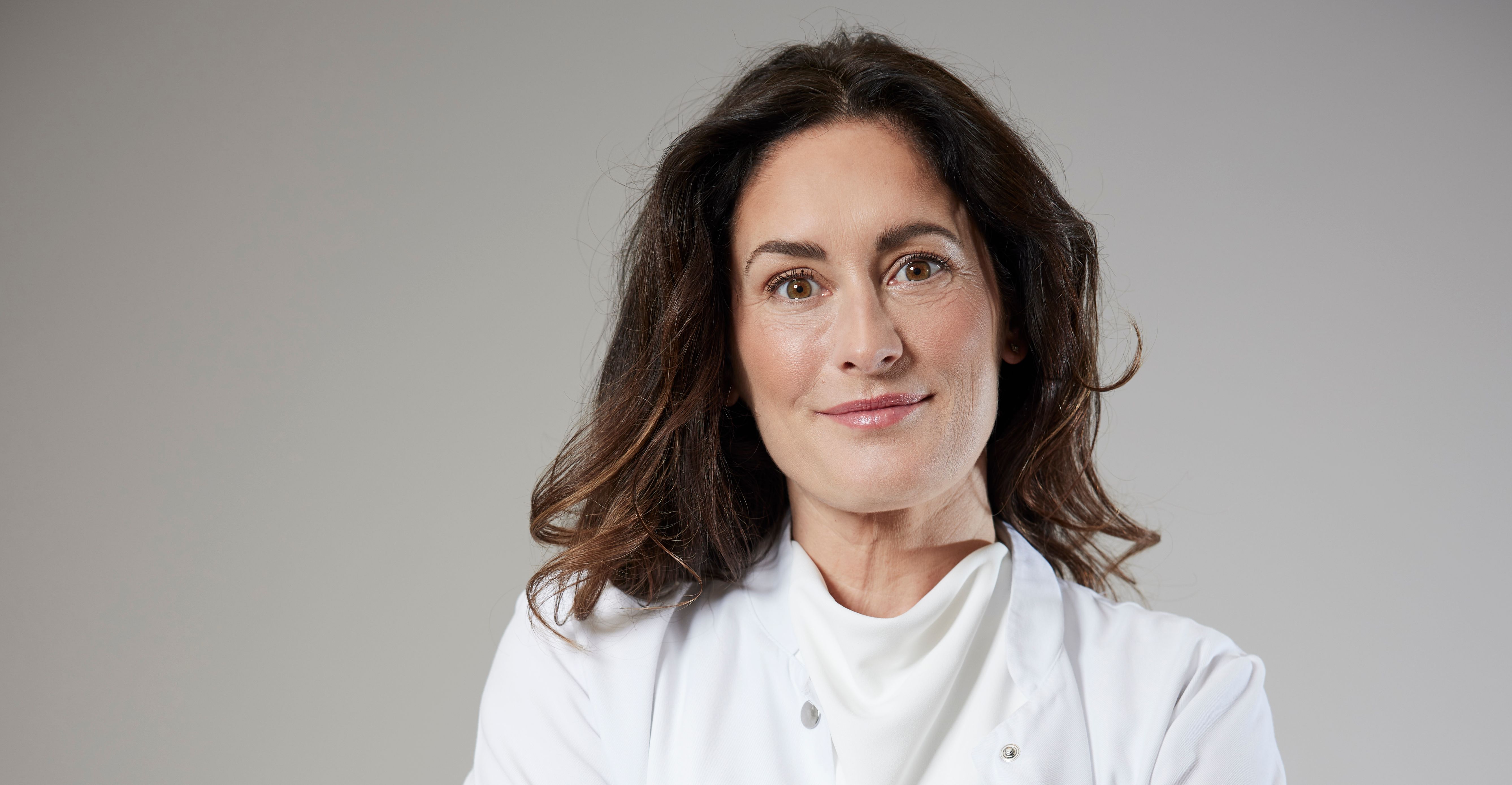
Dr. Caroline Werkmeister
Ambulanzzentrum des UKE GmbH
Services
Function begins at the foot
Dr. Caroline Werkmeister is an orthopedic surgeon, sports physician, and author – and one of the leading voices on musculoskeletal longevity. “I view longevity from the perspective of function,” she says. “What good is a long life if the body can't keep up?” For her, the musculoskeletal system – muscles, fascia, bones, and joints – is not an isolated mechanical system, but a central regulator of metabolism, stability, and independence. Muscle work influences inflammatory processes, insulin sensitivity, vascular health, and even neurobiological processes. “We often view muscles aesthetically or mechanically. Biologically speaking, however, the entire musculoskeletal system is an endocrine organ.” In her approach, she combines modern conservative orthopedics with a functional, biological understanding of movement.
Her path there led her through competitive sports. As a sprinter and long jumper, she developed an early sense of the functional medicine of the musculoskeletal system. In medical school, she was therefore irritated by the segmental thinking – here the foot, there the knee, above that the hip. She realized: That's not how movement works. “The body is a functional unit.”
Functional decline is one of the biggest but most underestimated aging phenomena.
Dr. Caroline Werkmeister
This perspective shapes her medical approach today. After years of surgical activity, her maxim is: to do everything to maintain functionality, support regeneration processes, and accompany or solve structural problems as conservatively as possible. Her long-standing work with top athletes is also beneficial—including at the German Olympic Sports Confederation and the German Paralympic Sports Association as well as head of the Athleticum, the examination center for Hamburg's Olympic athletes. Not least her role as team doctor for the Bundesliga professionals of HSV.
Paralympic Sports Association as well as head of the Athleticum, the examination center for Hamburg's Olympic athletes. Not least her role as team doctor for the Bundesliga professionals of HSV.
Today, Dr. Caroline Werkmeister brings her expertise as the head of the Department of Conservative Orthopedics at the University Medical Center Hamburg-Eppendorf (UKE) and in the private practice Sporthopaedic in Hamburg-Lokstedt. This way, she combines the best of both worlds: university affiliation with interdisciplinary pathways and highly specialized colleagues—and the advantages of a modern, well-equipped practice with functional diagnostics, movement analysis, and, when necessary, modern orthoregenerative procedures.
Many people optimize lab values but forget the body's most functionally important system – the muscles. They are a key regulator for metabolic health and systemic stability and resilience.
Dr. Caroline Werkmeister
For the doctor, musculoskeletal longevity is neither a training philosophy nor a fitness trend. It’s not about more performance or additional routines in everyday life. "It's about maintaining biological functions," she says—about muscle metabolism, joint mechanics, stability, adaptability. Working with one’s own musculoskeletal system should not be seen as an obligatory program, but as the actual reward—the moment of the day that works on all levels.
Mobility determines whether people remain independent, maintain social contacts, and actively participate in life. Functional decline often leads first to social withdrawal—long before manifest diseases occur. "It's not age that makes you immobile, but an inactive life." Hence, longevity is more than optimized blood values. "Many people improve laboratory parameters and supplements but forget the functionally most important system of the body—the muscles," Werkmeister says. Muscles produce myokines—hormone-like messengers—that have systemic effects: on metabolism, vessels, inflammation regulation, and the brain. Thus, movement is not a lifestyle add-on but a biological regulatory stimulus.
To find out where to best start to detect, slow down functional decline early, and thus ensure long-term physical autonomy, the orthopedist has developed a "Functional Longevity 5-Pillar Signature Program." According to this scheme, patients are recorded in their entirety: At the center are muscle and joint health as biological regulators of physical resilience and load capacity, metabolism, and mental health. Complementary parameters such as sleep, stress regulation, and training dosage are also included. Through individualized diagnostics and interdisciplinary therapy forms, early and specific intervention can take place.
Joints respond to function and the overall organism, not to age.
Dr. Caroline Werkmeister
Dr. Werkmeister is particularly passionate about functional foot therapy. After all, feet are the foundation of movement—not just for soccer players. Only with the optimal interaction of the three dimensions of the foot—the bony, muscular, and connective tissue foot—can its full potential be utilized. However, our modern lifestyle leads to the atrophy of muscles, tendons, ligaments, and connective tissue over the years. The consequences range from hallux valgus to flat feet to an increased risk of falls in old age.
The problem: In Germany, there is a gap between insole provision and surgery. Structured, functional rehabilitation concepts for the foot have so far been hardly established. This is precisely where Werkmeister's commitment comes into play: As a co-founder and chairwoman of a German Society for Functional Interdisciplinary Foot Therapy, she works on developing standards, establishing training curricula, and making qualified contact points accessible to those affected via a nationwide database.
Furthermore, she encourages everyone to consciously get their feet moving again: for example, through manual stretching and circling. Or by regularly changing shoes – with enough room for the toes. And above all, by walking barefoot. Her tip: walk daily for a few minutes in the “cat walk,” as in slow motion, consciously, without a hard heel strike, with active tension across the entire sole of the foot to the big toe. This activates the entire posterior chain – from the calves and thighs to the buttocks. Because in a sedentary society, this dorsal chain often degenerates – with consequences for posture, load distribution, and pain symptoms. What always excites the expert: how even small changes can achieve big effects – and prevent worse. And that “for free”!