© PMC
- München und Umgebung
- Innovative Orthopedics & Sports Orthopedics
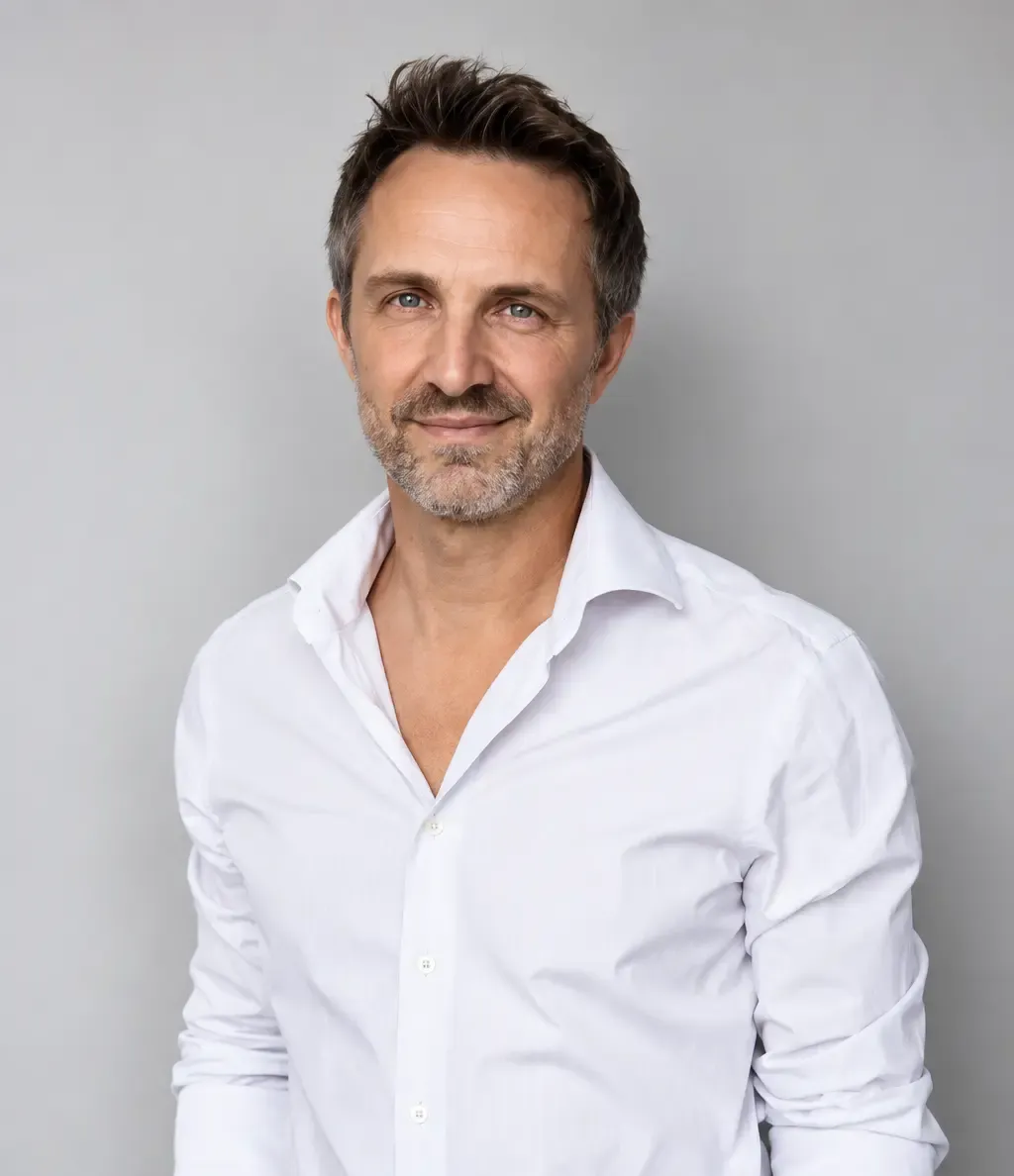
Niklas Haberstroh
MW - Praxis für Orthopädie & Sportmedizin
Services
Healing Without Harm
From the very beginning, Niklas Haberstroh was drawn to the hands-on nature of trauma surgery — and it was this fascination that set him on the path to his specialist training.
For many years, the Aachen native worked as a trauma surgeon at Luisenhospital Aachen, in the Department of Orthopedics at Uniklinik RWTH Aachen, and at Marienhospital Aachen. Alongside his clinical work in traumatology and arthroscopic joint surgery, Niklas Haberstroh served as team physician for a range of local sports clubs — covering football, handball, rugby, and cycling. In 2019, he obtained the additional qualification in sports medicine, followed in 2022 by the DFB Football Medicine certificate.
In day-to-day clinical practice, however, he increasingly found that conventional treatments were not giving patients adequate relief from their symptoms. In his search for alternative approaches, he was particularly won over by the treatment philosophy of Dr. Hans-Wilhelm Müller-Wohlfahrt. During his time at the MVZ of Luisenhospital Aachen, he gradually shifted his focus toward the conservative treatment of spinal and joint conditions. At a seminar in Munich, he had the opportunity to meet sports medicine legend Dr. Müller-Wohlfahrt in person — an encounter that led to an offer Haberstroh jokingly describes as a "knighthood," and which he regards as a natural next step on his professional journey, bringing him to Munich.
Since 2022, he has been part of the medical team at MW Praxis für Orthopädie & Sportmedizin, located in the heart of Munich's old town.
The important thing is to first ask: what is the problem? And is this problem something I can solve?
Niklas Haberstroh
Healing without harm — the foundational principle of medical practice — is the guiding motto of the clinic. Rather than reaching straight for the scalpel or a cortisone injection, the focus is on a combination of biological and homeopathic substances. This approach curbs inflammation and promotes regeneration: mobility is restored, stability is encouraged, pain is reduced, and function is improved. Physiotherapy, osteopathy, training, and personal exercises provide complementary support to help consolidate the gains achieved.
How well a treatment is working typically becomes clear within a few weeks. "Ideally, the patient comes in for a follow-up and is free of symptoms," says Haberstroh. "Sometimes adjustments need to be made, or treatment has to be repeated at some point to maintain the positive effect." Staying the course is a crucial piece of the puzzle — and that means patients taking the initiative: doing their exercises and keeping their follow-up appointments.
It is a concept that continues to convince him time and again. "I don't think this treatment can be improved upon," he says. "But I do believe it can be complemented." That is why he builds on this foundation with modern methods such as shockwave therapy and high-energy induction field therapy, as well as treatments with hyaluronic acid or blood plasma (PRP). The goal, however, remains the same: to stimulate and support the body's own healing processes — and to help patients as quickly as possible.
Wear and tear is not the main problem — loss of function is. Once that is restored, you can be free of symptoms again.
Niklas Haberstroh
His most important diagnostic tool is not high-tech equipment — it is his hands. And there it is again: the craft. Through palpation, by feel, he assesses skin texture and temperature, muscle tension, and the mobility of different tissue layers. He examines the range of motion and stability of the joints, sensing whether something is grinding or simply no longer moving "smoothly." It is valuable information that he wishes more of his colleagues would trust again, rather than relying solely on radiological findings. "We should once again have more
confidence in our own abilities."
All of this comes together for Haberstroh to form a diagnosis, which he supplements or corroborates as needed with ultrasound, X-ray, or MRI. "We don't reject device-based medicine — we simply don't want to leave the diagnosis entirely up to it." He illustrates the point with an example: "MRI scans of the spine frequently show degenerative changes that don't actually correspond to the patient's symptoms. If you go purely by the image, you may end up operating on something that doesn't address the real problem — because an image is a static snapshot that doesn't necessarily reflect the full picture of reality." Time and again, this reveals the same truth: wear and tear is not the main problem — loss of function is. Once that is restored, you can be free of symptoms again.
Loss of quality of life is what brings most people to me.
Niklas Haberstroh
With all his success, he remains clear-eyed about the limits of conservative medicine. "The important thing is to first ask: what is the problem? And is this problem something I can solve?" Not every injury can be treated this way — yet he can still help every patient, and this too is central to how he understands medicine: by listening regardless, and then referring people to wherever they can best be helped. Maintaining his expert network of doctors, physiotherapists, osteopaths, and exercise therapists is therefore just as important to him as his own clinical skills. "The worst thing you can do to a patient is tell them you can't help them."
For Niklas Haberstroh, it always comes back to the question of how symptoms affect a person's life. "Loss of quality of life is what brings most people to me." That includes pain and limitations in sport or everyday activities. Restoring that quality of life — by reestablishing bodily function and mobility — is the true measure of success in his treatment. In his own life, movement serves a different but equally important purpose: it is a counterbalance to the demands of the working day. He cycles, snowboards, and skis, goes ski touring and surfing — but above all, he runs. "I don't have to think about anything and can sort my thoughts incredibly well." The fact that movement plays such a central role in his private life is a perfect fit for a doctor who spends every day helping others get it back.
There is really nothing more rewarding than restoring a bodily function,
Niklas Haberstroh