© Hans
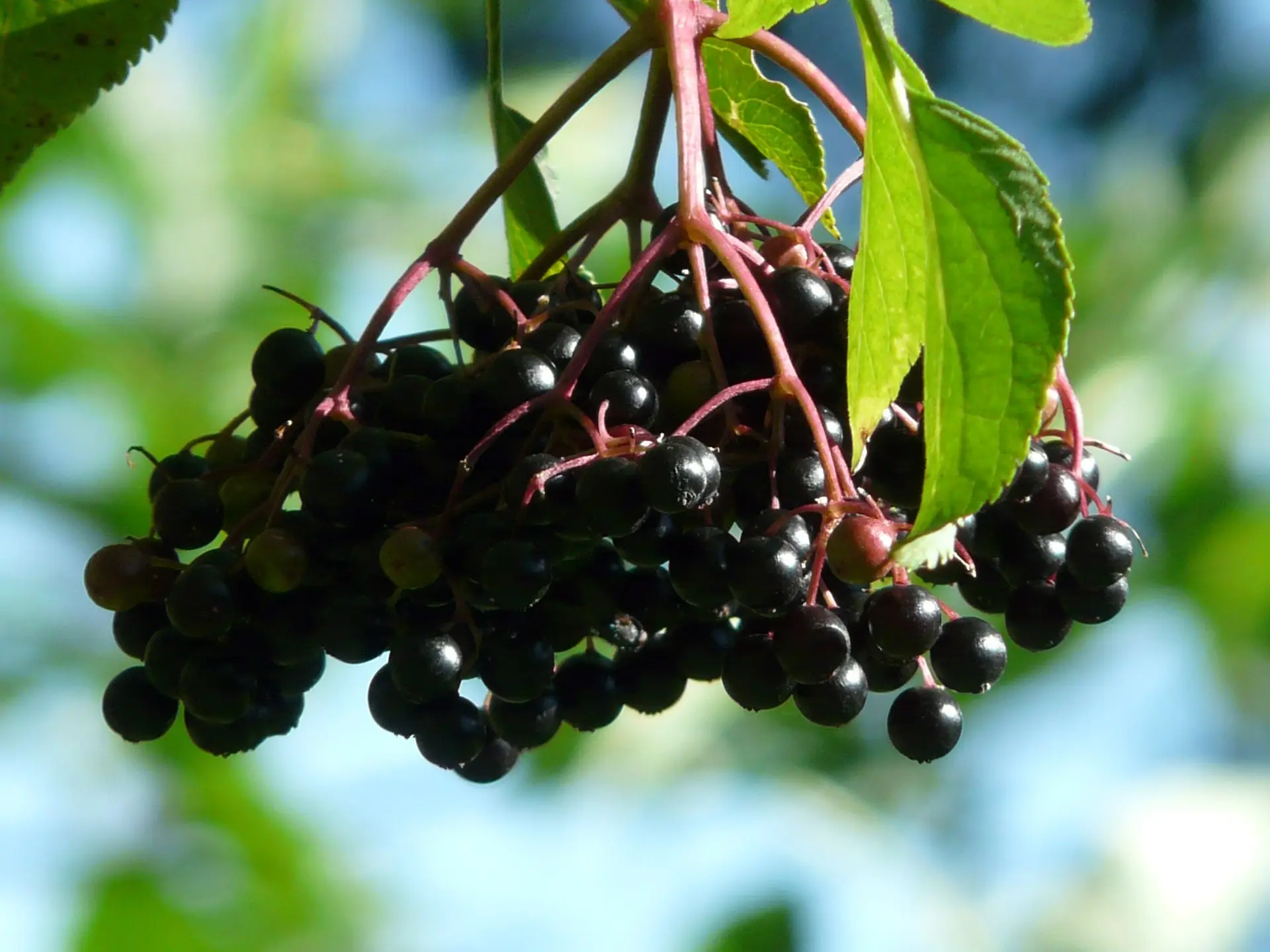
Elderberries contain anthocyanins, which give them their deep violet color and have strong antioxidant properties.
August 11, 2024
Jana Ackermann
Local superfood, rich in vitamin C and other antioxidants: Black elderberry possesses these healing properties
Elderberry is considered the "natural pharmacy" in naturopathy. Elderflowers are especially known for their effectiveness against colds, while the berries of the black elderberry can also have healing powers. To highlight its many benefits, the black elderberry was named the medicinal plant of the year 2024 by the Theophrastus Naturopathy Association.
More traditions are associated with the black elderberry — the most well-known of our native species — than with any other European plant , except for the mandrake. It has been accompanying humans since ancient times: Remains of elderberry seeds and branches were found in excavations of Stone Age dwellings built 12,000 years ago.
The elderberry was considered a sacred tree that offered protection from spirits and kept evil away, which is why it was often planted near houses and farms. Especially in Germanic and Celtic myths, the elderberry was seen as the dwelling place of gods and spirits, particularly the goddess Holda or Hulda, who was revered as the patroness of nature and the home.
As an old homestead tree, the black elderberry can be found almost on the doorstep and in many gardens. It is also native to field edges, hedges, and sunlit forest areas and can reach a height of ten meters. It is recognized by the white to pale yellow flowers that bloom in late spring and the black berries that are ripe for harvesting in early autumn.
Whether self-picked and processed or purchased as juice – elderflowers and berries are bursting with health-promoting ingredients. The berries, for example, contain anthocyanins, which give them their deep violet color and have extraordinarily strong antioxidant properties. With their high content of antioxidants they even surpass chokeberries or blueberries.
In addition, the flavonoids contained in elderberries have a positive effect on the venous system; menopausal and menstrual complaints can be alleviated by phytoestrogens. Also, vitamins are abundant in the berries, including vitamin A, the B-vitamin group, vitamin E – and with 37.1 mg of vitamin C per 100 g, elderberries are even among the top suppliers of vitamin C.
The long list of phytotherapeutically valuable ingredients is supplemented by significant amounts of minerals and trace elements such as iron, , potassium, calcium, phosphorus, zinc, and manganese.

© Tatiana Syrikova
For a cold, it is recommended to drink 150 ml of very warm elderflower tea three times a day.
The elderflowers — which can be used to make tea infusions, syrup, or vinegar — are noteworthy not only for anthocyanins and flavonoids but also for essential oils and mucilaginous and tannic substances. The sweating and fever-reducing effects of the flowers alleviate cold and flu symptoms, while the increased urination helps detox the body.
This also explains their positive effect on arthritic complaints.The primary focus of its healing power is its preventative effect on colds and flu infections. Other main areas of application for elderberry include respiratory diseases, infectious diseases, urinary tract infections, abdominal pain, inflammations of all kinds, allergies, arthritis, edema, nerve diseases, and digestive disorders.
Almost all indicators have now been scientifically confirmed — and so elderberry remains a valuable medicinal plant whose importance has been unchanged for millennia.
To best benefit from the antiviral and antibacterial effects of elderberry, the flowers can be dried or pressed and prepared as a tea. The so-called "sweat tea" expels all signs of a cold from the body. In the case of a cold, it is recommended to drink 150 ml of very warm elderflower tea three times a day.
In the kitchen, the tart and sour elderberries can be made into compote, sorbet, or juice. It should be noted that the berries should not be eaten raw, as they contain the toxin sambunigrin, which is converted to cyanide in the body and can lead to stomach pain or diarrhea. By heating to temperatures above 80 degrees, sambunigrin breaks down and loses its toxic effect.
For an elderberry juice, the fruits are boiled with a little water and simmered covered for 15 to 20 minutes. Pour through a fine sieve and bring to a boil again to minimize microorganisms. Sweeten with honey or maple syrup to taste and fill hot into clean glass bottles.
Those who want to make it easy for themselves can also resort to commercially available capsules, such as those from the Rubyni brand. Whether self-picked and prepared or consumed in capsule form, the more than 50 health-promoting ingredients of black elderberry speak for themselves to dedicate oneself to the local superfood in a whole new way. It has certainly earned the title 'Medicinal Plant of the Year 2024'