© Magnific
November 28, 2026
Marianne Waldenfels
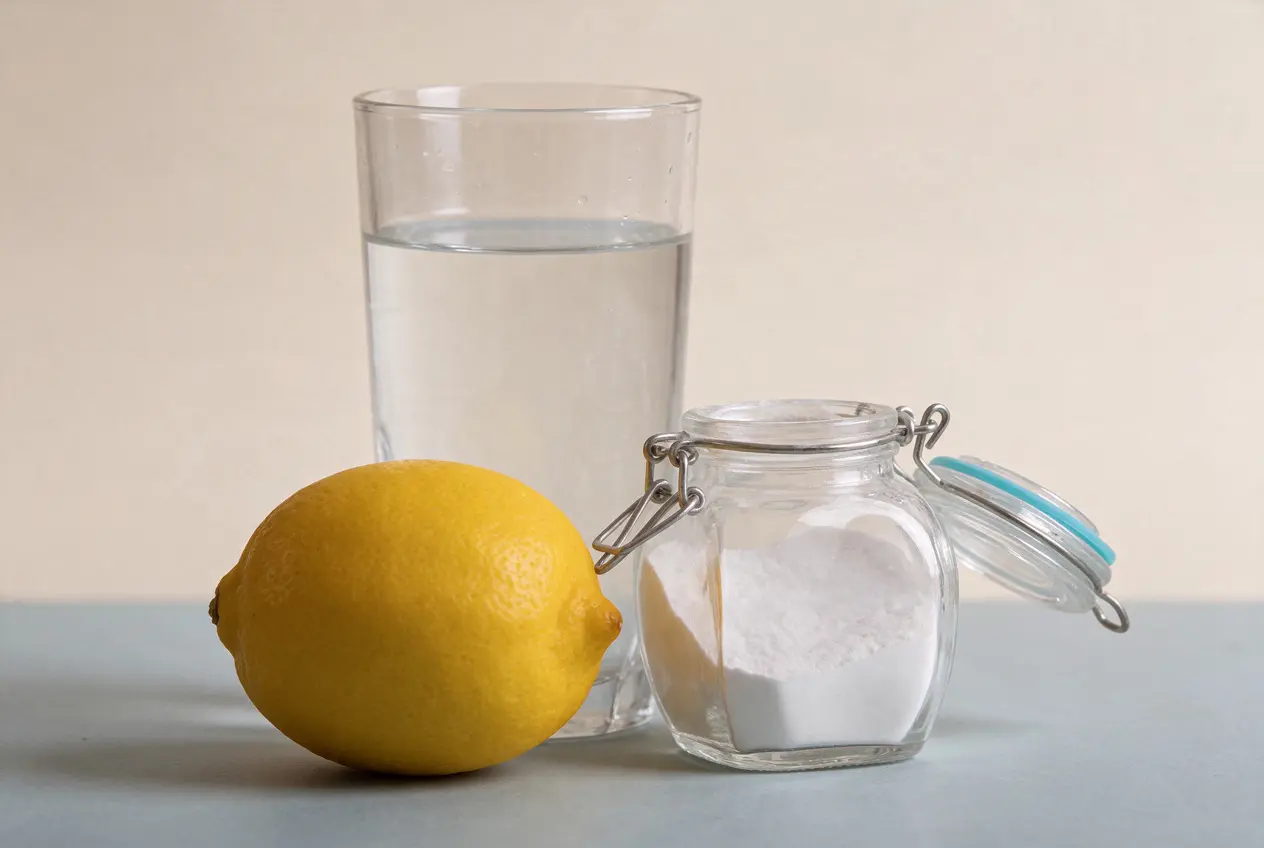
A glass of water mixed with baking soda, honey, and lemon is said to reduce belly fat and lower blood sugar. On TikTok, the recipe has reached hundreds of thousands of viewers. Yet this seemingly harmless home remedy can pose health risks, particularly for people with certain medical conditions.
An older man sprinkles white powder on a mannequin, claiming that this is how baking soda removes sugar from the body. He then mixes a spoonful of the powder with honey and lemon juice in a glass of water. The TikTok video attracted around 250,000 views in just a few days. In another video, a woman uses an anatomical model to demonstrate what baking soda supposedly "draws out" of the gut. That clip attracted more than 220,000 views.
Lower blood sugar, less belly fat, a cleansed gut — all supposedly achievable with a glass of baking soda water each morning. Baking soda has long been used to relieve certain digestive complaints. But its medicinal properties have to do with stomach acid, not sugar or body fat.
Baking soda is the common name for sodium bicarbonate. The substance is alkaline and neutralizes acid, which is why it has been used for generations to relieve heartburn and is available as a medicine in pharmacies. When the powder comes into contact with hydrochloric acid in the stomach, carbon dioxide is produced — which explains the typical belching that follows.
If you mix baking soda with lemon juice, this reaction starts right in the glass. The citric acid neutralizes part of the baking soda and the drink fizzes up. What remains unchanged, however, is the amount of sodium you consume with the drink.
One teaspoon of baking soda contains, according to nutritional tables, around 1,260 milligrams of sodium — equivalent to the amount found in approximately 3.2 grams of table salt.
The German Nutrition Society (DGE) recommends a guideline of up to six grams of table salt per day for adults. Anyone who drinks a teaspoon of baking soda in the morning has already consumed more than half that amount of sodium — before breakfast.
People with high blood pressure, heart failure, or impaired kidney function in particular need to watch their sodium intake. Too much can raise blood pressure and promote water retention.
Back in 2017, an Australian research team led by Dorit Samocha-Bonet investigated whether baking soda affects the rise in blood sugar after a meal. For the study, published in the journal Nutrients, 30 healthy adults took either around 1.7 grams of baking soda or a placebo before a carbohydrate-rich breakfast.
The scientists then measured blood sugar and insulin levels over three hours. No notable differences were found between the two groups.
Longer-term bicarbonate supplementation also showed no discernible benefit in people without diabetes. US researchers Susan Harris and Bess Dawson-Hughes analyzed data from 153 adults aged 50 and over for a study published in the journal Endocrine in 2010.
After three months, supplementation had improved neither fasting blood sugar nor insulin levels nor insulin sensitivity. On top of that, the honey in the TikTok drink itself adds sugar to the mix.
The idea that baking soda aids weight loss or specifically reduces body fat is not scientifically proven. Nor is there any medical basis for the alleged cleansing of the gut.
The reactions demonstrated in the videos bear little resemblance to what actually happens in human metabolism. Baking soda does not dissolve fat deposits. In healthy individuals, excess bicarbonate is excreted through the kidneys — but with larger amounts, this regulatory mechanism can be pushed beyond its limits.
The consequences of improper use were documented by toxicologists Al-Abri and Kearney from the California Poison Control Center. For a study published in the Journal of Clinical Pharmacy and Therapeutics, they analyzed nearly 200 reported cases. Around 60 percent of those affected had taken baking soda for stomach complaints.
More than half required medical assistance, and twelve people had to be treated as inpatients. The complications observed included disruption of the acid-base balance and disturbances of the mineral balance. A severe potassium deficiency in particular can trigger dangerous cardiac arrhythmias.
How frequently such complications occur overall cannot be determined from the poison control center reports alone, however.
Even when used for heartburn, the dosage has limits. The package insert of a baking soda preparation available in Germany specifies a maximum daily dose of three grams for adults. Taking it after a very heavy meal or consuming large amounts of carbonated drinks at the same time is not recommended, as the carbon dioxide produced by the reaction can put additional strain on an already very full stomach.
Particular caution is advised for the following groups:
• People with high blood pressure, heart failure, or kidney disease, as well as those who need to follow a low-sodium diet
• People taking diuretic medications, as these can promote mineral imbalances depending on the active ingredient
• Pregnant women and children under twelve years of age
For occasional heartburn, baking soda taken at the recommended dosage can provide short-term relief. Anyone who suffers from symptoms regularly should have the underlying cause medically investigated.
For daily use as a health drink, however, there is no proven benefit. People who follow a low-salt diet for health reasons should be particularly aware that baking soda water can contribute significantly to their daily sodium intake.

"Feel good, live better" – in this episode, Dr. Caroline Werkmeister talks about her favorite topic: feet. And what they reveal about your lifestyle.
Christine Bürg

An interview with
Dr. Caroline Werkmeister